Jesus and the Psalms by Michael Morales

“What do you think of the Christ?” In guiding the Jerusalem leaders to contemplate this question of eternal weight, Jesus turned to the authority of what is written “in the book of Psalms,” specifically Psalm 110 (Matt 22:41–46; Mark 12:35–37; Luke 20:40– 44), and asked a question childlike in both simplicity and profundity, the answer to which plunges one into the unfathomable wonder of the incarnation of God: How could David refer to his son as Lord? This probing question was but the application of what Jesus would later declare, that He Himself is the object of all the Scriptures of the Old Testament, summarizing their threefold division in Luke 24:44 as “the Law of Moses and the Prophets and the Psalms,” with the Psalms standing as the summary representative of the Writings. Read the full article: Jesus and the Psalms

[maxbutton id=”117″ url=”https://keygrowthconsultants.co.uk/” ]


“For the grace of God that bringeth salvation hath appeared to all men,” Titus 2:11

Thomas Manton

SERMON XXVI

Verse 25. – “My soul cleaveth unto the dust: quicken thou me according to thy word.”

DOCTRINE. – That God’s children may have such great afflictions brought upon them, that their souls may even cleave to the dust.

These afflictions may respect their inward or outward condition.

  1. Their inward condition; and so through grief and terrors of conscience they are ready to drop into the grave. That trouble of mind is a usual exercise of God’s people, see Heman’s complaint, Psalm lxxxviii. From verse 3 to the end of verse 7. “My soul is full of trouble, and my live draweth nigh unto the grave. I am counted with them that go down into the pit. I am as a man that hath no strength, free among the dead, like the slain that lie in the grave, whom thou rememberest no more, and they are cut off from thy hand. Thou hast laid me in the lowest pit, in darkness, in the deep. Thy wrath lieth hard upon me, and thou hast afflicted me with all thy waves. Selah.” Thou holdest mine eyes waking: I am so troubled that I cannot speak: I have considered the days of old, the years of ancient time, &c.” (Psalm lxxvii. 1, &c.).By the sense of God’s wrath he was even wounded to death; and the sore running upon him would admit of no plaster. Yea the remembrance of God was a trouble to him: “I remembered God, and was troubled.” What a heavy word was that! Soul-troubles are the most pressing troubles; a child of God is as a lost man in such a condition. 
  2. In respect of the heavy weight of outward pressures. Thus David fasted, and lay by all night upon the earth in his child’s sickness: “David therefore besought God for the child: and David fasted, and went in, and lay all night upon the earth. And the elders of his house arose, and went to him to raise him up from the earth; but he would not: neither did he eat bread with them” (2 Sam. xii. 16, 17). And when he was driven from his place by Absalom, and was in danger of his life every moment (which some interpreters think to be the case intended in the text) when he went up Mount of Olives bare foot, going and weeping: “And David went up by the ascent of Mount Olivet, and wept as he went up, and had his head covered; and he went barefoot, and all the people that was with him covered every man his head, and they went up weeping as they went” (2 Sam. xv. 30). 

    Now the reasons of this are these: –
    1. To correct them for past sins. This was the cause of David’s trouble, and this puts a sting into all miseries. God’s children smart under their sins here in this world, as well as others: “Behold the righteous shall be recompensed in the earth: much more the wicked and the sinner” (Prov. xi. 31). Recompensed in the earth, that is, punished for his sins. Compare with it, 1 Peter iv. 18: “And if the righteous scarcely be saved, where shall the ungodly and the sinner appear?” God punisheth here, that he may spare for ever. He giveth some remembrance of the evil, and corrects his people, not to complete their justification, or to make more satisfaction for God’s justice, than Christ hath made; yet to promote their sanctification, that is, to make sin bitter to them, and to vindicate the glory of God, that he is not partial.

    USE 1. – Let us bless God that we are not put to such great trials. How gentle is our exercise compared with David’s case! We are weak, and God will not overburden us. There is a great deal of the wisdom and love of God seen in the measure of the cross, and in the nature and kind of it. We have no cause to say belly cleaveth to the dust, or that we are pressed above measure. God giveth us only a gentle remembrance. If brought upon our knees, we are not brought upon our faces. 

  1. To humble them, and bring them low in the midst of their great enjoyments, therefore he casts them down even to the dust; because we cannot keep our hearts low, therefore God maketh our condition low. This was Paul’s case: “And our hope of you is steadfast, knowing that as ye are partakers of the sufferings, so shall ye be also the consolation: for we would not, brethren, have you ignorant of our trouble, which came to us in Asia, that we were pressed out of measure, above strength, insomuch that we despaired even of life: but we had the sentence of death in ourselves, that we should not trust in ourselves, but in God which raiseth the dead” (2 Cor. i. 7, 9). That is, not build too securely on their own sufficiencies.
  2. To try their graces, which are never tried to the life, till we be near the point of death. The sincerity of our estate, and the strength of faith, is not discovered upon the throne so much as in the dust, if we can depend upon God in the hardest condition.
  3. To waken the spirit of prayer: “Out of the depths have I cried unto to thee, O Lord” (Psalm cxxx. 1). Affliction puts an edge upon our desires. They that are flat and careless at other times, are oftenest then with God.
  4. To show the more of his glory, and the riches of his goodness in their recovery: “Thou which hast showed me great and sore troubles, shalt quicken me again, and shalt bring me up again from the depths of the earth: thou shalt increase my greatness, and comfort me on every side” (Psalm lxxi. 20, 21). By the greater humiliation, God prepareth us for the greater blessings. As there are multitudes of troubles to humble and try the saints; so his mercies do not come alone, but with great plenty.

    USE: II – If this should be our case, do not count it strange. It is a usual exercise of God’s people; let us therefore not be offended, but approve God’s holy and wise dispensation. If there be great troubles, there have been great sins, or there will be great comforts, or for the present there are great graces. As such a dispensation is a correction, there is reason to approve it. If you be hid in the dust, have not you laid Gods honour in the dust, and trampled his laws under foot? As it is a trial, you have cause to approve it: for it is but meet that when God hath planted grace in the heart, he should prove the strength of it. Therefore if you be kept so long in your heavy condition that you seem dead; yet if you have faith to keep you alive, and patience be exercised, it is for your greater good: “And not only so, but we glory in tribulation also, knowing that tribulation worketh patience” (Rom. v. 3). And so affliction is an exercise for your benefit and spiritual improvement. The husbandman when he teareth and render the ground up with the plough, it is to make it more fruitful; the longer the metal is in the fire, the more pure it cometh forth; nay, sometimes you have your outward comforts with advantage after troubles: “And the Lord turned the captivity of Job when he prayed for his friends: also the Lord gave Job twice as much as he had before: and the Lord blessed the latter end of Job more than his beginning.”(Job xlii. 10, 12). Oh when we are fitted to enjoy comforts, we shall have them plenty enough.

    DOCTRINE II. – That in such great and heavy troubles we should deal with God for help.

    In the dust David calleth to God for quickening. The reasons of this, why in great troubles we should go to God for help, are, first, from the inconvenience of any other course. (1.) If the godly should smother their grief, and not go to God with it, their sorrow were able to choak them. It is no small case that we have a God to go to, to whom we may freely open our minds. Prayer hath a pacative virtue; as, Hannah “prayed unto the Lord, and wept sore;” and mark the event, “the woman went her way, and did eat, and her countenance was no more sad,” &c. (1 Sam. i. 18). An oven stopped up, is the hotter within; but vent and utterance giveth ease to the heart, if it be merely by way of complaint to a friend, without expectation of relief; much more to go to God, and lay open our case before him. (2.) To seek our comfort elsewhere from earthly things, it is a vain and evil course. 1st, It is vain; for God is the party with whom we have to do. In many troubles the creatures may be instruments of our wo; but the principle party is God. Strike in with him, and you stop the mischief at the head: “When a man’s ways please the Lord, he maketh even his enemies to be at peace with him” (Prov. xvi. 7). In other troubles God hath a more immediate hand, as sickness and terrors of conscience; our business then lieth not with the creatures in sickness, not with physicians first, but with God. In troubles of spirit we are not to quench our thirst at the nearest ditch, but to run to the fountain of living water; not to take up with ordinary comforts, that is an attempt to break prison, and to get out of troubles before God letteth us out. He is our party then, whoever be the instrument. 2ndly, It is evil that we refuse to come before God when he whippeth us into his presence, and beateth us to the throne of grace: “All this evil is come upon us, yet made we not our prayer before the Lord our God, that we might turn from our iniquities, and understand thy truth” (Dan. ix. 13). When men are ready to dies, and will not so much as confer with the physician, they are either stupid or desperate. Afflictions summon us into his presence. God sendeth a tempest after us, as after Jonah. Now that trouble which chaseth us to God, is so far a sanctified troubled. Second, The hope of relief from God, who alone can and will help us: “He putteth his mouth in the dust: if so be there may be hope” (Lam. iii. 29).  Now this hope is from God’s power and will.

(1.) His power. God can quicken us when we are as good as dead, because he is the wee-spring of life and comfort. Other things give us life, but only as water scaldeth when it is the instrument of heat; but God alone can help us. God is the great quickener: “That I might trust in him that raised the dead:” and, “I am the resurrection and the life.” (2.) His will. When we are humble and teachable in our affections, 1st, It is some hope if we have nothing to bring before God but our grief and misery; for he is pitiful. A beggar will uncover his sore to move your bowels; for so many times all the reason that a poor, pitiful, afflicted person can bring for himself is lamenting his case to God, how discouraged he is, and apt to faint, as David represents his case: “My soul cleaveth to the dust;” and elsewhere: “But I am poor and sorrowful; let thy salvation, O God, set me up on high” (Psalm lxix. 29). Justice seeketh a fit object, but mercy a fit occasion. 2ndly, It is a greater ground of hope when we are humbled under God’s hand, and have a due sense of our condition, that is, are convinced of our emptiness, weakness, nothingness, or emptied of self-conceit and carnal confidence: “For the Lord shall judge this people, and repent himself for his servants, when he seeth that their power is gone, and there is none shut up or left” (Deut. xxxii. 36). God’s judgments are to break our carnal dependencies. 3rdly, Still hope increaseth, when we acknowledge his justice and wisdom in all our troubles: “If then their uncircumcised hearts be humbled, and they than accept of the punishment of their iniquity” (Lev. xxvi. 41); kiss the rod wherewith they are corrected, be glad it is no worse, and see that all this cometh from a just and wise God. 4thly, There is further hope, when we can cast ourselves upon his faithfulness and omnipotency, in the face of all discouragements. Christ’s question to the man long possessed was: “If thou canst believe, all things are possible to him that believeth” (Mark ix. 23). God’s power is exercised, when glorified by faith and dependence. 5thly, When we submit to what may be most for his glory. Carnal prayers, though never so earnest, fail when we are too earnest upon our private end, and the means which we fancy: “Not unto us, O Lord, not unto us; but unto thy name give glory, for thy mercy and for thy truth’s sake” (Psalm cxv. 1).

    USE – In deep calamities run to God, lay forth your case feelingly and with submission to the justice of his providence, trusting to his power, and submitting to his wisdom, without obtruding your model upon God, but leaving him to his own course; and this is the way to speed. Take heed,-

  1. Of a stupid carelessness under the rod; it is a time of seeking after God, a summons to the creature to come before him. Now if we think to sport away our trouble without looking after God’s comforts, it is a desperate security: “They have belied the Lord, and said, It is not he; neither shall evil come upon us; neither shall we see sword nor famine” (Jer. v. 12).
  2. Take heed to despondency. The throne of grace is set up on purpose for such a time: “Let us therefore come boldly to the throne of grace, that we may obtain mercy, and find grace to help in time of need.” (Heb. iv. 6). “Call upon me in the day of trouble, I will deliver thee, and thou shalt glorify me” (Psalm 1. 15). Open your case before the Lord.
  3. Take heed of pitching too much upon outward things, either as to the time or way of deliverance. Lust is vehement; but the more you seek, the more comfortable will be the issue: “Do good in thy good pleasure unto Sion; build thou the walls of Jerusalem” (Psalm li. 18).

  Secondly, We come now to David’s supplication or petition thereupon; where observe, – 

First, The request itself, “Quicken thou me.”

    That God’s children need often go to God for quickening, because they often lie under deadness of heart; and therefore should desire God who is the fountain of grace, to emit; and send forth his influence.

    They need this quickening.
    (1.) By reason of their constant weakness,
    (2.) Their frequent indispositions and distempers of soul.

    1st, Their constant weakness in this world.
1. By reason of their inclination to sin.
2. The imperfection of their motions towards that which is good.

    (1.) By reason of their inclination to sin. Carnal concupiscence draweth us aside from God, to sensual objects, James i. 14; a man is “drawn away of his own lust.” There is a strong bias of corruption drawing us from Christ to present things: “Let us lay aside every weight, and the sin which doth so easily beset us” (Heb. xii. 1). There is a carnal affection, or corrupt inclination, which carrieth us out inordinately to things lawful, or too often to things unlawful; this hangeth as a weight, retarding us in all our heavenly flights and motions. The love and care of the world, which is apt to press down the soul, and doth twine about us, and insinuate with us; the Apostle calleth it a law in his members (Rom. vii. 23); a warning to us, how when the flesh draweth us off so strongly one way, to implore the divine grace to draw us more strongly to the other.

(2.) Because of the imperfection of their motions to that which is good, though there be a purpose, bent of heart, and inclination that way. Our gyves are still about us; we feel the old maim. Grace is like a spark in wet wood that needs continued blowing.

     Secondly, The next circumstance is the argument, “according to thy word;” Chrysostom saith, “Quicken thou me to live according to thy word: but it is not a word of command, but a word of promise.” Mark here, –

1. He doth not say, Secundum meritum meum, but, secundum verbum tuum; the hope, or that help which we expect from God, is founded upon his word; there is our security, in his promises, not in our deservings:  Promittendo se fecit debitorem, &c.

2. then there was so little Scripture written, yet David could find out a word for his support: Alas! In our troubles and afflictions, no promise occurreth to mind. As in outward things, many that have less, live better than those that have abundance; so here, now Scripture is so large, we are less diligent, and therefore, though we have so many promises, we are apt to faint, we have not a word to bear us up.

3. This word did not help him, till he had lain under the heavy condition, that he seemed dead. Many, when they have a promise, think presently to enjoy the comfort of it. No, there, is waiting and striving first necessary. We never relish the comfort of the promises, till the creatures have spent their allowance, and we have been exercised. God will keep his word, and yet we must expect to be tried.

4. In this his dead condition, faith in God’s word kept him alive. When we have least feeling, and there is nothing left us, the word will support us: “And being not weak in faith, he considered not his own body now dead, when he was about an hundred years old, neither yet the deadness of Sarah’s womb; he staggered not at the promise of God through unbelief, but was strong in faith, giving glory to God” (Rom. vi. 19, 20).

5. One good way to get comfort, is to plead the promise to God in prayer, Chirographa tua injiciebat tibi Domine, show him his hand writing; God is tender of his word. These arguings in prayer, are not to work upon God, but ourselves.

    USE. – Well then, let us thus deal with God, looking to him in the sense of our weakness, praying often to God for quickening, as David doth in the text. God keepeth grace in his own hands, and dispenseth it at his pleasure, that he may often hear from us, and that we may renew our dependence upon him; it is pleasing to him when we desire him to renew his work, and bring forth the actings of grace in their vigour and lustre. And let us acknowledge Divine grace, if there be strong actings of faith and love towards God. He is to be owned in his work.

[maxbutton id=”141″ url=”https://keygrowthconsultants.co.uk/2018/06/14/psalm-119-v-34-yea-i-shall-observe-it-with-my-whole-heart-thomas-manton/2/” ] 

“For the grace of God that bringeth salvation hath appeared to all men,” Titus 2:11

The Wolf’s Teeth-Feminism

What To Do?

What should you do as elders of the flock? Allow me to be specific.

1. Teach Biblical principles about gender relationships. Don’t expend all your energies reacting negatively to feminist agitators in your local church or community or even in your denomination; rather, as elders you must teach positively and clearly, and insist that your preacher do so from the pulpit as well. The fundamental Biblical truths regarding male and female role relationships in marriage, home, church and society. Of course, from the distortions evident in the way feminists rework crucial Biblical doctrines, it becomes clear that accurate and foundational knowledge of Biblical doctrine is essential to combat this and every attack of Satan. The prophet was right: “My people are destroyed for lack of knowledge.” So, teach your people a full and balanced diet of Biblical Truth!

2. Don’t overreact. Not all of God’s people who have been influenced by a feminist agenda embrace all of the planks of the platform of Gender Feminism. In fact, some are righteously caught up in a pursuit of Biblical justice; they have merely adopted dangerous words and concepts because these folks; each currency of today’s debate. Be patient with these folks; teach them that “ideas have legs,” that much of today’s rhetoric arises from thoroughly unbiblical notions. Express those invisible notions.

3. Use women and their God given gifts Biblically and appropriately in the life of the church. One theologian once observed that “cults are the unpaid debts of the church,” that cults arise where the church has failed to be thorough in her obedience. If that is true of cults, it is surely true of feminism. It has arisen in no small measure because appropriate ministry by women in the life of the church has been stymied, often by mere tradition and certainly in conflict with Scripture. For instance, 1 Cor. 14:33 clearly prohibits women from preaching (the literal meaning of the verse suggests a prohibition, not of speech itself, but of “being the speaker” i.e., the preacher. See also 1Pet. 4:11). That does not mean that a woman may not be used wisely and appropriately to speak or teach under the Biblical supervision of the eldership within a Sunday School class. Again, the 1 Tim 2:12 prohibition against a woman “having authority over a man” does not require men to chair every single committee within a local church, nursery committee included! Rather, the text prohibits the usurping of authority, particularly within the context of authoritative teaching.

4. Make sure the “careers” of wives and mothers are honoured within your home and your church fellowship. Nothing combats feminism in our society and within our churches more effectively then the careful articulation of the high view of these roles in Scripture. To be sure, you may not convert a rabid Gender Feminist by referring to Eph. 5:22, but you will surely encourage godly women (and instruct godly men!) when you hold high the role of a wife as a gift of God who is a life-partner in the work of the kingdom, and that of a mother as a precious instrument in God’s hand for the nurture and shaping of the next generation of His own servants, complete with prophetic, priestly and royal duties.

 “With a Shephard’s Heart” Reclaiming the Pastoral Office of Elder
by John R. Sittema (PP.75-76)

[maxbutton id=”86″ url=”https://keygrowthconsultants.co.uk/2018/04/24/the-wolfs-teeth-relativism/2/” ]

“For the grace of God that bringeth salvation hath appeared to all men,” Titus 2:11

The True Manner of Keeping the Lord’s day.

MEDITATIONS OF THE TRUE MANNER OF PRACTICING PIETY ON THE SABBATH-DAY.

ALMIGHTY God will have himself worshipped, not only in a private manner by private persons and families, but also in a more public sort, of all the godly joined together in a visible church: that by this means he may be known not only to  be the God and Lord of every singular person, but also of the creatures of the universal world. ….

3. Because that on this day Christ rested from all the sufferings of his passion, and finished the glorious work of our redemption. If, therefore, the finishing of the work of the first creation, by which God mightily manifested himself to his creatures, deserved a Sabbath to solemnize the memorial of so great a work, to honour of the worker, and therefore calls it “mine holy day,” (Isa. Lviii. 13;) much more does the new creation of the world, effected by the resurrection of Christ, whereby he mightily declared himself to be the Son of God (Rom. i. 4), deserve a Sabbath, for the perpetual commemoration of it, to the honour of Christ, and therefore worthily called the Lord’s day (Rev. i. 10.) For, as the deliverance out of the captivity of Babylon, being greater, took away the name from the deliverance out of the bondage of Egypt (Jer. xxiii. 7, 8;) so the day on which Christ finished the redemption of the world did more justly deserve to have the Sabbath kept on it, than on that day on which God ceased creating the world. As, therefore, in the creation, the first day wherein it was finished, was consecrated for a Sabbath; so in the time of redemption, the first day wherein it was perfected must be dedicated to a holy rest; but still a seventh day kept according to God’s moral commandment. The Jews kept the last day of the week, beginning their Sabbath with the night (Gen. ii. 2; Lev. xxiii. 32; Neh. xiii. 19), when God rested; but Christians honour the Lord better, on the first day of the week (Matt. xxviii. 1), beginning the Sabbath with the day when the Lord arose (Acts xx. 7, 11.) They kept their Sabbath in remembrance of the world’s creation; but Christians celebrate it in memorial of the world’s redemption; yea, the Lord’s day being the first of the creation and redemption, puts us in mind, both of the making of the old, and redeeming of the new world.

As, therefore, under the Old Testament, God, by the glory consisting of seven lamps, seven branches, &c. (Exod. xxv. 31), put them in remembrance of the creation, light, and Sabbath’s rest; so, under the New Testament, Christ, the true light of the world, appears in the midst of the seven lamps, and seven golden candlesticks (Rev. i. 13), to put us in mind to honour our Redeemer in the light of the gospel of the Lord’s seventh day of rest. And seeing the redemption, both for might and mercy, so far exceeds the creation, it stood with great reason that the greater work should carry the honour of the day. Neither does the honourable title of the Lord’s day diminish the glory of the Sabbath; but rather, being added, augments the dignity of it; as the name Israel, added to Jacob, made the patriarch the more renowned (Gen. xxxii. 28.)

The reason taken from the example of God’s resting from the work of the creation of the world continued in force till the Son of God ceased from the work of the redemption of the world, and the former gave place to the latter.

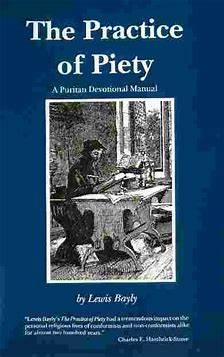
The Practice of Piety 
by Lewis Bayly. 
A Puritan Devotional Manual. 
(pp. 159-164)

[maxbutton id=”141″ url=”https://keygrowthconsultants.co.uk/2018/04/05/meditation-of-the-misery-of-the-soul-in-this-life-new/2/” ]

[maxbutton id=”117″ url=”https://keygrowthconsultants.co.uk/” ]


“For the grace of God that bringeth salvation hath appeared to all men,” Titus 2:11

3 Simple Rules For Listing to a Sermon

 It is not enough that we go to church and hear a sermons. We may do so for fifty years, and be nothing better, but rather worse. “Take heed,” says our Lord, “how you hear.” Would anyone know how to hear properly? Then let them lay to heart three simple rules.

We must hear with FAITH, believing implicitly that every word of God is true, and shall stand. The word in the old time did not profit the Jews, since it was “not mixed with faith in those who heard it (Heb. 4:2).

We must hear with REVERENCE, remembering constantly that the Bible is the book of God. This was the habit of the Thessalonians. They received Paul’s messages, “not as the word of men, but the word of God” (Thess. 2:13).

We must hear with PRAYER, praying for God’s blessing before the sermon is preached, praying for God’s blessing again when the sermon over. Here lies the rand defect of the hearing of many. They ask no blessing, and so they have none. The sermon passes through their minds like water through a leaky vessel, and leaves nothing behind.

Summary

Let us bear these rules in mind every Sunday morning, before we go to hear the Word of God preached. Let us not rush into God’s presence careless, reckless, and unprepared, as if it mattered not in what way such work was done. Let us carry with us faith, reverence, and prayer. If these three are our companions, we will hear with profit, and return with praise.


But grow in grace, and in the knowledge of our Lord and Saviour Jesus Christ. To him be glory both now and for ever. Amen. (II Peter 3:18)

True grace is progressive, of a spreading, growing nature. It is with grace as it is with light: first, there is the daybreak; then it shines brighter to the full noonday. The saints are not only compared to stars for their light, but to trees for their growth (Isa. 61:3; Hos. 14:5) A good Christian is not like Hezekiah’s sun that went backwards, nor Joshua’s sun that stood still, but is always advancing in holiness, and increasing with the increase of God.…. (T. Watson)

The growth of grace is the best evidence of the truth of grace. Things that have not life will not grow. A stake in a hedge will not grow. But a plant that hath vegetative life will grow. The growing of grace shows it to be alive in the soul.…. (T. Watson)

Christian, as ever you would stir up others to exalt the God of grace, look to the exercise and improvement of your own graces. When poor servants live in a family, and see the faith and love and wisdom and patience and humility of a master, shinning like the stars in heaven, it draws forth their hearts to bless the Lord that ever they came into such a family…. When men’s graces shine as Moses’ face did, when their life, as one speaketh of Joseph’s life, is a very heaven, sparkling with virtues as so many bright starts, how much others are stirred up to glorify God, and cry, “These are Christians indeed! These are an honour to their God, a crown to their Christ, and a credit to their gospel! Oh, if they were all such, we would be Christians, too!….. (Thomas Brooks)

The right manner of growth is to grow less in one’s own eyes. “I am a worm and no man” (Psalm 22:16). The sight of corruption and ignorance makes a Christian grow into a dislike of himself. He doth vanish in his own eyes. Job abhorred himself in dust (Job 42:6). This is good to grow out of conceit with oneself….. (T. Watson)

In is a sign of not growing in grace, when we are less troubled about sin. Time was when the least sin did grieve us (as the least hair makes the eye weep), but if he neglected closet prayer; now he can omit family prayer. Time was when vain thoughts did not trouble him; now he is not troubled for loose practice. There is a sad declension in religion, and grace is so far from growing that we can hardly perceive its pulse to beat….. (T. Watson)

If now you would be rich in graces, look to your walking. It is not the knowing soul, nor the talking soul, but the close-walking soul, the obediential soul, that is rich. Others may be rich in notions, but none so rich in spiritual experience, and in all holy and heavenly graces, as close walking Christians….. (Thomas Brooks) 

It is a sign of not growing in grace, when we grow more worldly. Perhaps once we were mounted into higher orbits, we did set out our hearts on things above and speak the language of Canaan. But now our minds are taken off heaven, we dig our comforts out of these lower mines, and with Satan compass the earth. It is a sign we are going downhill apace, and our grace is in a consumption. It is observable when nature decays, and people are near dying, they grow more stooping. And truly when men’s hearts grow more stooping to the earth, and they can hardly lift up themselves to an heavenly thought, if grace be not dead, yet it is ready to die….(T. Watson)

Experience will tell every Christian that the more strictly and closely and constantly he walketh with God, the stronger he groweth in duty. Infused habits are advantaged by exercise. As the fire that kindled the wood for sacrifice upon the alter first came down from heaven, but then was to be kept alive by the care and labour of the priests, so the habits of spiritual grace are indeed infused from God, and most be maintained by daily influences from God, yet with a concurrence also of our own labours, in waiting upon God, and exercising ourselves with godliness; and the more a Christian doth so exercise himself, the more strong he shall grow. (Collings on Providence)  

Let them be thy choicest companions, that have made Christ their chiefest companion. Do not so much eye the outsides of men as their inside: look most to their internal worth. Many persons have their eyes upon the external grab of a professor. But give me a Christian that minds the internal worth of persons, that makes such as are most filled with the fullness of God his choicest and chiefest companions….(T. Brooks)

Christians may be growing when they think they do not grow. “There is that maketh himself poor, yet he is rich” (Prov. 13:7). The sight that Christians have of their defects in grace, and their thirst after greater measures of grace, makes them think they do not grow. He who covets a great estate, because he hath not so much as he desires, thinks himself poor… (Thomas Watson)

Souls may be rich in grace, and yet not know it, not perceive it. The heir is heir to a crown or a great estate, but knows it not. Moses’ face did shine, and others saw it, but he perceived it not. So many a precious soul is rich in grace, and others see it and know it and bless God for it, and yet the poor soul perceives it not. Sometimes this arises from the soul’s strong desires of spiritual riches. The strength of the soul’s desires after spiritual riches doth often take away the very sense of growing spiritually rich, yet they cannot perceive it, they cannot believe it. It is just so with many a precious Christian: his desires after spiritual riches are so strong, that they take away the very sense of his growing rich in spirituals. Many Christians have much worth within them, but they see it not. It was a good man that said, “The Lord was in this place and I knew it not.” Again, this ariseth sometimes from men neglecting to cast up their accounts. Many men thrive and grow rich, and yet, by neglecting to cast up their accounts, they cannot tell whether they go forward or backward. It is so with many precious souls. Again, this ariseth sometimes from the soul’s too frequent casting up of its accounts. If a man should cast up his accounts once a week, or once a month, he may not be able to discern that he doth grow rich, and yet he may grow rich. But let him compare one year with another, and he shall clearly see that he doth grow rich. Again, this sometimes ariseth from the soul’s mistakes in casting up its accounts. The soul many times mistakes; it is in a hurry, and then it puts down ten for a hundred for a thousand. Look, as hypocrites put down their counters for gold, their pence for pounds, and always prize themselves above the market, so sincere souls do often put down their pound for pence, their thousands for hundreds, and still prize themselves below the market.     (T. Brooks)  
                                                            J. C. Ryle, Holiness pp.95-97

[maxbutton id=”117″ url=”https://keygrowthconsultants.co.uk/” ]


“For the grace of God that bringeth salvation hath appeared to all men,” Titus 2:11

Charles Bridges on Psalm 119

Wisdom

Psalm 119:156
“Great is thy tender mercies, O Lord; quicken me according to thy judgments.”

It is most cheering to pass from judgment to mercy-from the awful state of the wicked, to adore the mercies of God to his people. We were naturally no better than they. The most eminent sinner looks on himself with wonder- “Is not this a brand plucked out of the fire?” (Zech. 3:2.) Never will he lose the remembrance – “Who maketh thee to differ?” (1 Cor. 4:7.) To mercy-rich mercy alone-we trace the distinction between those that are “quickened,” and those that remain “dead in trespasses and sins.” (Eph. 2:1, 4, 5.)

But let us mark the features of this mercy. How great in extent! Estimate its greatness by the infinite debt which blots out (Isaiah 43:22-25; 1:18)-the eternal ruin from which it saves (Ps. 86:13)-the heavenly crown to which it raises (Rev. 1:5, 6.) Trace it to the mind of God-that first eternal purpose of mercy, which set us apart for his glory. (Eph. 1:4-6.) Mark it in that “time of love,” when his mercy rescued us from Satan, sin, death, and hell, and drew us to himself. (Ezek. 16: 6-8.) As soon as might we span the arch of heaven, as fully grasp the greatness of his mercy. (Psal. 103: 11. Isa. 55:8, 9.) And then how tender is it in its exercise! Such was the first beam of mercy that “visited us.” (Luke 1:78.) Such has been the continued display. So natural, as from a Father. (2 Cor. 1:3. Psal. 103:13.) So yearning, “as one whom his mother comforteth!” Such a multitude of those tender mercies! The overflowing stream follows us through every step of our wilderness-journey. The blessing “compasses us about,” abounds towards us, keeps us steadfast, or restores us when wandering, and will preserve us to the end. Happy are we-not in the general perception-not in the hearsay of it, “Bless the Lord, O my soul, and all that is within me, bless his holy name.” (Psal. 103:3.) But what poor returns have we made for this infinite love! Surely the petition for quickening grace suits us well. This was the constant burden of David’s prayer. For he was not like many professors, who can maintain their assurance in a lower and careless walk. No he was a believer of a very high standard; desirous not only of proving his title to the blessing, but of living in its habitual and active enjoyment.

Often as this petition has been brought before us, in the course of this Psalm, it is too important ever to be passed over. Let us at this time us it for the purpose of individual self-inquiry. In what respects do I need quickening grace? Are my views of sin, and especially of the sin of my own heart, slight and superficial? Do they fail in producing humility, abasement, tenderness of conscience, circumspection of conduct? If it be so-Quicken me, O my God! Does my apprehension of a Saviour’s love serve to embitter sin to me? To crucify sin in me, to warm and enliven my heart with love to him, and zeal in his service?  If I am convicted of coldness to such a Saviour, sluggishness in such a service, I need to pray-­O Lord, quicken thou me! And how do I find it with regard to prayer itself? Are not my prayers general-unfrequent-wandering? Is not my service too often constrained, a forced duty, rather than a privilege and delight? O Lord, quicken me!

Yet many Christians, through a mistaken perception, know not when they have received the blessing. They have looked for it in strong and sensible excitement; and in defect of this sink into despondency. Whereas; the solid influence is independent of sensations, and consists in a tender sensibility of sin, a spiritual appetite for the gospel, active energy in Christian duties, and continual progress in heavenly exercises. But under no circumstances must the evil of a dead and drooping state be lightly thought of; obscuring as it does the difference between the believer and the worldling, or rather between the believer and the formalist. O believer, you have great need to carry your complaint again and again unto the Lord! ‘Quicken me-quicken me-according to thy judgments–­ according to those gracious promises, which are the method of thy proceedings, and the rule of thy dispensations of grace.’ You cannot be too earnest to welcome the breathings of the Spirit, or too cautious, that your indolence resists not the Divine impression. When he quickens you with his influence, do you quicken with your supplications-“Awake, O north wind; and come, thou south: blow upon my garden, that the spices thereof may flow out.” (Cant. 4:16.) Persuade-entreat-constrain his stay. Enlivened by his energy, how happy, and in your own sphere how useful, a member of the Church of Christ you may be found!  Your soul will be invigorated-your graces strengthened-and your affections elevated-in trouble, cheerful, steady dependence upon the Saviour, and in daily renewed devotedness to his service. The more the spiritual life is thus “exercised unto godliness, the more delightfully will you realise the active service and everlasting praise, which will constitute the perfection of heavenly enjoyment.” (Rev. 22:3, 4; 4:8.)

“For the grace of God that bringeth salvation hath appeared to all men,” Titus 2:11

Learning to Love the Psalms

David, the Believer, and Christ in Psalm 22

The psalm begins with a section dominated by the agonized prayer of David (vv.1-21). David is expressing in the first place his own experience of feeling abandoned by God. Here is the most intense suffering God’s servant can know – not just that enemies surround him (vv.7, 12-13) and that his body is in dreadful pain (vv.14-16), but that he feels that God does not hear him and does not care about his suffering. And this is not just the experience of David. It is the experience of all God’s people in the face of terrible trouble. We wonder how our loving Father can stand idly by when we are in such distress.

And then after pointing out the faith and hope of David expressed in that deep cry, “My God, my God, why hast thou forsaken me? (v.1), showing that David still held on to the truth that God was his God, Godfrey returns to that idea of God’s apparent abandonment:

John Calvin in his commentary concluded that a sense of being forsaken by God, far from being unique to Christ or rare for the believer, is a regular and frequent struggle for believers. He wrote, ‘There is not one of the godly who does not daily experience in himself the same thing. According to the judgment of the flesh, he thinks he is cast off and forsaken by God, while yet he apprehends by faith the grace of God, which is hidden from the eye of sense and reason.’ We must not think that living the Christian life is easy or that we will not daily have to bear the cross.

But then the author takes us to Christ, in whom these words are fulfilled – for our salvation:

This psalm  is not only the experience of every believer, but it is also a very remarkable and specific prophecy of the sufferings of Jesus. We see the scene of the crucifixion especially clearly in the words, ‘A company of evil doers encircles me; they have pierced my hands and feet – I can count all my bones – they stare and gloat over me; they divide my garments among them, and for my clothing they cast lots’ (vv.16-18). Here we see that indeed this psalm comes to its fullest realization in Jesus.

Jesus knew this psalm and quoted its first words to identify with us in our suffering since He bore on the cross our agony and suffering. ‘Since therefore the children share in flesh and blood, he himself likewise partook of the same things, that through death he might destroy the one who has the power of death’ (Heb.2:14). Jesus does deliver us by becoming our substitute and the sacrifice for our sins.

Taken from W. Robert Godfrey’s new book Learning to Love the Psalms(Reformation Trust, 2017). I am now reading through the sections that treat various psalms from each of the five books into which the Psalter is divided. This is drawn from the author’s explanation of Psalm 22 (Book 1).

Taken from: The Three R’s Blog

[maxbutton id=”117″ url=”https://keygrowthconsultants.co.uk/” ]


“For the grace of God that bringeth salvation hath appeared to all men,” Titus 2:11