PÆDOBAPTISM.

ITS ACCORDANCE WITH THE INSTITUTION OF CHRIST, AND THE NATURE OF THE SIGN.

Divisions of this chapter, —I. Confirmation of the orthodox doctrine of Pædobaptism, sec. 1-9. II. Refutation of the arguments which the Anabaptists urge against Pædobaptism, sec. 10-30. III. Special objections of Servetus refuted, sec. 31, 32.
Sections.
1. Pædobaptism. The consideration of the question necessary and useful. Pædobaptism of divine origin.
2. This demonstrated from a consideration of the promises. These explain the nature and validity of Pædobaptism.
3. Promises annexed to the symbol of water cannot be better seen than in the institution of circumcision.
4. The promise and thing figured in circumcision and baptism one and the same. The only difference in the external ceremony.
5. Hence the baptism of the children of Christian parents as competent as the circumcision of Jewish children. An objection founded on a stated day for circumcision refuted.
6. An argument for Pædobaptism founded on the covenant which God made with Abraham. An objection disposed of. The grace of God not diminished by the advent of Christ.
7. Argument founded on Christ’s invitation to children. Objection answered.
8. Objection, that no infants were baptised by the apostles. Answer. Objection, that pædobaptism is a novelty. Answer.
9. Twofold use and benefit of pædobaptism. In respect, 1. Of parents. 2. Of children baptised.
10 Second part of the chapter, stating the arguments of Anabaptists. Alleged dissimilitude between baptism and circumcision. First answer.
11. Second answer. The covenant in baptism and circumcision not different.
12. Third answer.
13. Infants, both Jewish and Christian, comprehended in the covenant.
14. Objection considered.
15. The Jews being comprehended in the covenant, no substantial difference between baptism and circumcision.
16. Another argument of the Anabaptists considered.
17. Argument that children are not fit to understand baptism, and therefore should not be baptised. 18. Answer continued.
19. Answer continued.
20. Answer continued.
21. Answer continued.
22. Argument, that baptism being appointed for the remission of sins, infants, not having sinned, ought not to be baptised. Answer.
23. Argument against pædobaptism, founded on the practice of the apostles. Answer.
24. Answer continued.
25. Argument founded on a saying of our Lord to Nicodemus. Answer.
26. Error of those who adjudge all who die unbaptised to eternal destruction.
27. Argument against pædobaptism, founded on the precept and example of our Saviour, in requiring instruction to precede baptism. Answer.
28. Answer continued.
29. Answer continued.
30. Argument, that there is no stronger reason for giving baptism to children than for giving them the Lord’s Supper. Answer.
31. Last part of the chapter, refuting the arguments of Servetus.
32. Why Satan so violently assails pædobaptism.

[maxbutton id=”141″ url=”https://keygrowthconsultants.co.uk/2023/03/08/paedobaptism/2/” ] [maxbutton id=”117″ url=”https://keygrowthconsultants.co.uk/” ] 

“For the grace of God that bringeth salvation hath appeared to all men,” Titus 2:11

Is Drinking Wine Lawful?

Is Drinking Wine Lawful?

Question: “Paul spoke about taking wine because the water system was faulty. With our pure water system, is drinking wine inexcusable?”

The text to which the reader refers is I Timothy 5:23: “Drink no longer water, but use a little wine for thy stomach’s sake and thine often infirmities.”

However, the reader is wrong when he explains Paul’s admonition to Timothy to drink wine instead of water, because the water system was faulty. There is no mention of this in the text. On the contrary, Paul gives his reason for advising Timothy to drink wine: “for thy stomach’s sake and thine often infirmities.”

This admonition to Timothy is part of the inspired Scriptures. There can be no doubt about it that there are certain infirmities a person may have that can be eased by use of “a little wine.” My own doctor, not a strong believer in the infallibility of God’s Word, advised me to drink a glass of wine every evening for health reasons. He did not recommend this because he was aware of this admonition in the Bible, but he advised it because it is good medical practice; doctors are aware of the beneficial effects of wine. The reason why he was somewhat reluctant to recommend the use of wine was because he was afraid of overuse, leading to addiction. For a number of years after he gave me his advice, he asked me, every time he saw me, “How much wine are you drinking?”

The Holy Spirit recommends wine for health purposes, for wine is a gift of God who does not give gifts that are harmful. “Every good gift and every perfect gift is from above, and cometh down from the Father of lights” (James 1:17). The meaning of the text is this: Everything God gives is a good and perfect gift; it is man who takes God’s gifts and corrupts them by using them in the service of sin.

Paul echoes this same truth earlier in I Timothy when he warns against people who forbid saints to use certain gifts of God. He writes, “Now the Spirit speaketh expressly, that in the latter times some shall depart from the faith, giving heed to seducing spirits, and doctrines of devils … Forbidding to marry, and commanding to abstain from meats, which God hath created to be received with thanksgiving of them which believe and know the truth. For every creature of God is good, and nothing to be refused, if it be received with thanksgiving: for it is sanctified by the word of God and prayer” (I Tim. 4:1, 3-5).

There are those in the church who know their weakness in this area, that for them it would be dangerous to drink, even small amounts, of alcoholic beverages. Wisely and in obedience to God, they refrain—also from drinking wine. Whether or not to drink wine is a matter of Christian liberty and must not be placed in the realm of violations of God’s law. As Martin Luther said, “Men can go wrong with wine and women. Shall we then prohibit and abolish women?”

Controversies have been carried on in the recent history of the church over the question of the legitimacy of drinking wine. There are those who hold that drinking any alcoholic beverage is wrong. They refuse to use wine in the administration of the Lord’s Supper and insist on using grape juice. They attempt to prove their case from Scripture. I have read their material and find it unconvincing. It cannot be proved from Scripture that drinking wine is wrong; and, quite the contrary, wine has a unique symbolism in Scripture, for it points to the joy and prosperity of the heavenly Canaan.

Briefly, and without going into all the arguments, Noah’s sin was not planting a vineyard and making wine from the grapes; it was drunkenness (Gen. 9:20-21). Judah received the birthright blessing, a part of which is, “Binding his foal unto the vine, and his ass’s colt unto the choice vine; he washed his garments in wine, and his clothes in the blood of grapes” (Gen. 49:11). Wine was used in sacrifices in the Old Testament times. God accepted it as part of Israel’s offerings to Him (Num. 15:5). Psalm 104:15 mentions the gift of wine as part of the blessings of Jehovah upon Israel: “And wine that maketh glad the heart of man, and oil to make his face to shine.” Christ describes the beauty of the church with a reference to the mouth of His bride: “And the roof of thy mouth like the best wine for my beloved, that goeth down sweetly” (Song 7:9).

The Lord changed water into wine at the wedding feast in Cana of Galilee, for marriages are pictures of the true marriage of Christ and His church, and wine is symbolic of the joy of this heavenly marriage.

The Lord took the cup of wine used in the Old Testament Passover feast and changed it into the wine of the New Testament Lord’s Supper, which He commanded us to observe until He returns to take His church to glory.

Nor can it be argued that the wine referred to in Scripture is actually grape juice, because, although Scripture uses different words in the Hebrew for “wine,” the same words are used for wine when it is a gift of God and for warnings against drunkenness; the same is true in the New Testament.

Nevertheless, the warnings against drunkenness are important and necessary. Especially in those churches found in affluent cultures, drunkenness is a great sin—not only among adults, but also among teenagers. Addiction is God’s punishment on habitual drunkenness, but only because drunkenness is wrong. A person commits sin by becoming drunk just one time. It is a serious sin, not because of its possible consequences, but because of the fact that God forbids it. The church’s preaching must warn against this sin and call those who become drunk to repent of their sin.

But the terrible sin of drunkenness as an abuse of God’s gifts must not lead us to take the position that the Christian life requires a sanctified child of God to abstain from all alcoholic beverages, including wine. This, too, is sin, for it is a despising of God’s good gifts. Paul speaks some pretty sharp words against those who deny the use of God’s gifts. So let the gift of wine also be received with thanksgiving and be sanctified by the Word of God and prayer.

Prof. H. Hanko

“For the grace of God that bringeth salvation hath appeared to all men,” Titus 2:11

Bible on Wine

“…. if “wine” in the Bible is always non-alcoholic (i.e., grape-juice). This guest article, arguing that this is not the case, is by Rev. Jai Mahtani of Bethel Protestant Reformed Church, Chicago.

1) The Bible’s first reference to “wine” is of an alcoholic beverage; Noah became drunk through it (Gen. 9:21). Non-alcoholic grape-juice cannot intoxicate.

2) No one can get drunk with too much grape-juice, but we read in Ephesians 5:18: “And be not drunk with wine, wherein is excess; but be filled with the Spirit.” It is significant that God’s Word never declares, “Do not drink.” Instead, we read, “Do not be drunken.” Scripture does not forbid the use of alcoholic beverages, but it forbids the abuse of them.

3) The Lord Jesus drank (alcoholic) wine. In Luke 7:33-34, Christ contrasts Himself with John the Baptist for whereas John, as a Nazarite, drank no wine, Jesus did drink wine. Christ’s lawful and well-known use of wine became the occasion for His enemies’ lie that He was a “winebibber,” that is, a drunkard or a wino. It is as plain as day, from the mouth of the Lord Himself, that He drank the wine that John abstained from drinking, that is, an alcoholic beverage. Christ even miraculously produced wine at the wedding feast of Cana (John 2:1-11).

4) The qualifications for elders and deacons in I Timothy 3 include “not given to wine” (3) and “not given to much wine” (8). Similarly, Titus 1:7 requires that an elder be “not given to wine.” Office-bearers are warned not to drink too much wine; they are not admonished not to drink too much grape-juice. Should a church disqualify/discipline an office-bearer if he has a liking for grape-juice?

5) Grape-juice is not medicinal as fermented wine is. Thus Paul advises Timothy, “Drink no longer water, but use a little wine for thy stomach’s sake and thine often infirmities” (I Tim. 5:23).

Although wine is a good gift of God and it is lawful to drink it, we must be equally mindful of the Bible’s warnings against excessive drinking (Prov. 20:1). We also condemn underage drinking, drinking and driving, etc., as well as overindulging in food, since Scripture speaks as much against gluttony as it does against drunkenness. Drunkenness is often mentioned in the Bible in connection with fornication and “partying.” It is right up to date in its condemnation of the twenty-first century nightclub scene: “For the time past of our life may suffice us to have wrought the will of the Gentiles, when we walked in lasciviousness, lusts, excess of wine, revellings, banquetings, and abominable idolatries” (I Peter 4:3).

Finally, the most fundamental principle is to do all things to the glory of God! When this motivates us, we will live out of the love of God and show our love for our fellow men. “Whether therefore ye eat, or drink, or whatsoever ye do, do all to the glory of God” (I Cor. 10:31; cf. Matt. 5:16).

Rev. Mahtani

[maxbutton id=”117″ url=”https://keygrowthconsultants.co.uk/” ]


“For the grace of God that bringeth salvation hath appeared to all men,” Titus 2:11

Sec. III. Authority of Church Officers

Sec. III. Authority of Church Officers

The inspired record of this Council of Jerusalem plainly sanctions the Presbyterian principle of the right of the office-bearers of the church, as distinguished from the ordinary members, to decide judicially any disputes that may arise about the affairs of the church, —to be the ordinary interpreters and administrators of Christ’s laws for the government of His house. It is quite plain, from the inspired narrative, that the apostles and elders, or presbyters— i.e., the office-bearers of the church— alone composed the Council; that they exclusively were its constituent members, and that they alone formally and judicially decided upon the point brought before them. It is true that the brethren— i.e., the Christian people— generally were present, that they were consulted, and that they concurred in the decision; and the place which they occupied in the matter will be afterwards adverted to. But it is certain that the apostles and elders alone composed the Council, and alone formally pronounced the decision. We have the regular formal minute of sederunt, as it might be called, in the sixth verse, where we are told that “the apostles and elders came together for to consider of this matter;” and at the fourth verse of the sixteenth chapter, the decrees of the Council are expressly described as “the decrees that were ordained of the apostles and elders which were at Jerusalem;” and these decrees, it is manifest, were authoritative or binding upon the churches. There is, indeed, a clear distinction kept up in the New Testament between the office-bearers and the ordinary members of the church: the one class being described as rulers and governors, and of course being invested with a certain kind and degree of authority; and the other being bound to render a certain measure and degree of submission and obedience.

There are some obvious and important limitations of the authority to be exercised by the one party, and of the obedience to be rendered by the other.

First, The authority of the office-bearers, while restricted exclusively to the affairs of the church, —to the administration of the ordinary necessary business of Christ’s house, —is even there not lordly, or legislative, or discretionary, but purely ministerial, to be exercised in Christ’s name, i.e., in entire subjection to His authority and to His word. Christ is the church’s only King and Head; and this implies that its affairs must be regulated by His mind and will revealed in His word. The constitution and laws of His kingdom have been fixed by Him, and cannot by any human or uninspired authority be altered, abrogated, or extended. The office-bearers of the church are not lords over God’s heritage: they have no dominion over men’s faith; they have no jurisdiction over the conscience; they are the mere interpreters of Christ’s word, the mere administrators of the laws which He has enacted.

Secondly, Even within their proper sphere of simply interpreting and administering Christ’s laws— i.e., applying them to the actual regulation of the affairs of the church as occasion may require— the office-bearers of the church are not, as Papists allege, infallible, so as to be entitled to exact implicit and unquestioning obedience. No such privilege has been promised to, or conferred upon, them; and to claim it, is to put themselves in Christ’s stead, and to usurp dominion over the conscience.

Thirdly, The office-bearers of the church have no exclusive right to interpret Christ’s laws. Upon scriptural and Protestant principles, every man has the right of private judgment, —i.e., he is entitled to interpret the word of God for himself upon his own responsibility, for the regulation of his own opinions and conduct, for the execution of his own functions and the discharge of his own duties, whatever these may be; and Christ has conferred upon no class of men any power that interferes with the exercise of this right. This right of private judgment belongs to all men in their different capacities, public and private, and ought to be exercised by them with a view to the discharge of their own duties and functions, whatever these may be. Civil rulers are, on this ground, entitled and bound to interpret the word of God for themselves, with a view to the right discharge of any duties, competent to them in their own sphere and province, with respect to which the word of God affords any data for decision; and every private individual enjoys the same right or privilege. The same principle, in this general mode of stating it, applies equally to ecclesiastical office-bearers; but in their case it must be viewed in connection with this additional Scripture truth, that they are Christ’s ordinance for the ordinary government of His visible church, —that it is their function and duty, while it is not the function and duty of any other party, to administer His laws for the management of the ordinary necessary business of His church, — for deciding and regulating all those matters which require to be regulated and decided wherever a church of Christ exists and is in full operation. This being their function and duty, they are of course entitled and bound to interpret the word of God for themselves, in the exercise of their own judgment, and upon their own responsibility, for the execution and discharge of it. Christ has not vested the government of His church— i.e., the management of its ordinary necessary business— either in civil rulers or in the body of ordinary members; and therefore they are not entitled to interpret the word of God for the purpose of executing this function. He has vested the ordinary administration of the affairs of His church in ecclesiastical office-bearers; and to them, therefore, and to them alone, belongs the right of interpreting and applying His laws for the attainment of this object, the accomplishment of this end. In so far as the decisions of ecclesiastical office-bearers affect other men collectively or individually, these men are fully entitled to judge for themselves whether or not the decisions pronounced are in accordance with the mind and mil of Christ; and by the judgment which they form upon this point to regulate their own conduct, in so far as they have any function to execute, or any duty to discharge. But since the judicial determination of the office-bearers of the church is the only ordinary provision which Christ has made for administering the affairs of His church, no party is entitled to interfere authoritatively with them in the execution of this function; and all parties, while exercising their own right of private judgment, ought to regard the decisions of the ordinary and only competent authorities in the matter with a certain measure of respect and deference— at least to this extent, that if they do resolve to condemn and disobey the decisions, they ought to be very sure that these decisions are opposed to the mind and will of Christ, and that, therefore, they may confidently appeal from the decision of the office-bearers to the tribunal of the Head of the church Himself.

With the limitations, and in the sense, now explained, it is a scriptural principle which has always been held by Presbyterians, in opposition to Independents or Congregationalists, that the government of the church— the ordinary administration of Christ’s laws, the judicial determination of any questions that may arise, and that may require to be decided in the ordinary management of the business of His house— is vested, not in the body of the people, or the ordinary members, but in the office-bearers of His church; that they constitute the only regular and ordinary tribunal for the decision and regulation of these matters; that therefore their decisions should be treated with respect and obedience, unless they be contrary to the mind and will of God; and that men who refuse to obey them are bound to be well satisfied, upon good scriptural grounds, that they can confidently appeal to Christ against the sentence pronounced in His name upon earth.

It is the doctrine of our church, as set forth in the Confession of Faith, that “the decrees and determination” of Synods and Councils, “if consonant to the word of God, are to be received with reverence and submission, not only for their agreement with the word, but also for the power whereby they are made, as being an ordinance of God appointed thereto in His word.” Without giving a full exposition of this general principle, I merely observe that it may be regarded as comprehending the three following positions: —

First, That all the decrees and determinations of Councils or Church Courts should be regulated by the word of God.

Secondly, That they are to be received with reverence and submission only when they are consonant with the word of God; and that of this, of course, every one is entitled and bound to judge for himself on his own responsibility.

Thirdly, That when they are consonant with the word, regard should be had, in the feelings with which they are contemplated, and in the way in which they are treated, not only to the fact of their accordance with the word, but also to the fact that they are righteous. and scriptural decisions of a legitimate authority, rightfully exercised; that they are instances of the right working of a provision which God has made, of an ordinance which He has appointed for the administration of the affairs of His church. The ordinary provision which God has made for settling public controversies and regulating the ordinary necessary business of His church, is by the public deliberations and decisions (according to His word) of the ordinary office-bearers; and when, through His blessing, this provision operates rightly, and brings out results which are consonant with the word, men are called upon to recognise the wisdom and goodness of God in appointing such an ordinance, and in guiding it, upon this particular occasion, to a right and scriptural result, and to contemplate and receive the result with the reverence and submission which the realization of the truth that this is an ordinance of God appointed thereto in his word is evidently fitted to call forth.- William Cunningham Historical Theology vol.1, pp. 50-54

[maxbutton id=”117″ url=”https://keygrowthconsultants.co.uk/” ]


“For the grace of God that bringeth salvation hath appeared to all men,” Titus 2:11

Answering Objections to Catechism Preaching Part 1

The following article has been adapted from the 1986 edition of the Mid-America Journal of Theology.


Objections have been raised against the Heidelberg Catechism and its homiletical use from the very beginning.

This should occasion no surprise. As soon as it made its appearance on the European scene, Roman Catholics, many Lutherans, and a variety of Anabaptists had little good to say about it. Nor did sermons based on its contents always receive unstinted praise from members of Reformed congregations. Even some early preachers neglected or agitated against this demand.

Such objections have by no means died away.

We still find people who argue that such preaching is sterile. The same truths are preached again and again, and that always in the same way to the wearying of the congregation. Why not, so they insist, preach something new and interesting and challenging? Others opine that this “sum of doctrine” is much too deep and abstruse for the average congregation which always includes children and young people. Occasionally one hears that these sermons are “not evangelistic” or that they “do not answer the questions which people are asking today,” or that they fail to meet the real needs of those who sit in the pews.

Whether seriously intentioned or not, these objections should not be lightly brushed aside. More may well be implicit in them than appears at first hearing. Preaching is always much too solemn and sacred to be taken for granted. Yet the response can be relatively simple.

Far too many people, including also some serious-minded believers, no longer know what preaching is and ought to be according to God’s will. Some greatly prefer a dramatic spectacle or soothing music which need not engage the mind. Listening, let it be remembered, is an art learned only by long and laborious practice. Ours is not an age outstanding for such an exercise in patience. Add to this the anti-intellectual and anti-authoritarian spirit which seeps daily into nearly every heart and home, and we will not be surprised that sermons which deal with the lofty themes of Holy Scripture are often far from popular. 

Opposition to systematic instruction in the Christian faith, also by way of preaching, frequently springs from such cliches as “no creed but Christ” and “Christianity is not a doctrine but a life.” Here are false dilemmas which the Bible itself refutes. Unless we “know” Jesus Christ (and this involves doctrinal content as well as commitment of heart and life), we cannot confess him before men, which is our chief calling and without which there is no salvation (Matt. 10:32-33). Nor can we engage in any Christian duty without proper instruction in the what and the why and the how of godly living according to the word. Here rank-and-file unbelievers usually put to shame many who belong to the churches. The former can state and defend and propagate their convictions and life-style, while many of the latter are tongue-tied. They may still attend church with a degree of regularity. But failing to ask seriously the right questions about God, themselves, and their relation to others and the world in which they live, their minds remain untouched and their hearts unchanged. Preoccupied with pleasures and profits of the daily round, they fall under the apostolic judgment of “having a form of godliness but denying its power.” They simply will not be bothered with what they regard as unnecessary and unprofitable details in the Bible which they still claim to believe.

The blight of ignorance, indifference, and superficiality with respect to God’s truth has by no means left Reformed churches unscathed either. True and saving faith is more than a religious feeling. It knows what it believes and in whom it trusts. Without sound knowledge of God as he reveals himself in the word, faith is reduced to fantasy which deceives for time and eternity. It is always under attack from without and within. Everything conspires against learning to know and enjoy him rightly, so that faith needs to be regularly and repeatedly strengthened by the facts and mysteries of the Christian religion. 

On this our Lord also insisted when commanding the disciples to engage in “teaching them to obey everything I have commanded you.” Only then, according to the testimony of Paul, “will we no longer be infants, tossed back and forth by the waves, and blown here and there by every wind of teaching and by the cunning and craftiness of men in their deceitful scheming. Instead, speaking the truth in love, we will in all things grow up into him who is the Head, that is Christ, from whom the whole body, joined and held together by every supporting ligament, grows and builds itself up in love, as each part does its work.”

How else, then, can an individual or a congregation grow strong in faith, firm in hope, and abounding in love? All who despise instruction in the Christian religion soon cease to deserve the name Christian.

But can God’s truth, so some who object to catechetical preaching would protest, be put into words which have abiding value and validity? Is not truth in its depth-dimension really relational, so that all statements and propositions which attempt to reproduce it are at best only poor approximations?  

Here, it must be realized, the attack is not leveled only against creeds and confessions; it ranges itself against the very form and content of Scripture itself. To explain and explode this objection lies outside the scope of this article. Let it simply be affirmed that all who argue in this fashion can never, if true to what they claim, say anything meaningful about anything. Nor have they learned to listen reverently and believingly to what the prophets, the apostles, and especially our Lord Jesus taught.

But can a creed, especially one formulated some hundreds of years ago, meet the spiritual needs of today? Is not its language much too antiquated and the questions which it asks and answers far too irrelevant to the everyday concerns of our time? Not a few, especially philosophers and scientists and theologians bewitched by the explosion of knowledge characteristic of the twentieth century, would answer the above with a resounding insistence that we have outgrown the past. 

What should be faced at this juncture is whether human nature has been so radically changed that a totally new approach is demanded. Also, has not language itself, especially that of ordinary folk, undergone such great changes that we no longer understand what then was put on paper?

Reasonable responses to such assertions, it seems to us, lie at hand.

Has man’s nature actually changed so much, despite all that has happened to our physical and spiritual environment, so that we can discount the past? Are not all men, then as well as now, endowed with the ability to think and speak and so communicate with each other? Are not all sinners in need of divine salvation? And do not our problems, no matter how seemingly complex and difficult of resolution, stem from the same alienation from God, ourselves, others, and the world around us even as they did centuries ago?

Few will deny that the temper of our times is radically other than that which affected our grandparents, let stand those of far earlier generations. Mass media—including newspapers, magazines, and novels that flood the marketplaces as well as radio and television—impinge on old and young every day. All these affect what we think and feel and do, not only by the facts which they often purport to present but much more profoundly by explanations and interpretations which are inescapably added. Always there is more than we can assimilate, much less evaluate with any degree of discernment. The world, as someone so aptly remarked, is too much with us late and soon. All this seems to raise barriers between us and the life- and world-view presented in the Bible and summarized in the evangelical confessions of the church. Preachers and people alike will have to keep this always in mind. Man, much more perhaps than in the past, has become a problem to himself and to others. Increasingly he feels himself alone and lost in a wilderness with no way out. Life for such persons has become directionless, because they are without chart and compass.

All the more reason, then, to get back to the teachings of Scripture, as these are so pointedly, practically, and pastorally summarized in the creeds, including the Heidelberg Catechism. In subordination and subservience to the Bible, it attempts to ask the right questions and provide the only satisfying answers to the riddle of our existence. Nor can man know himself in isolation. Left to themselves, all without exception have lost the way, which is the Lord Jesus Christ in his fulness, and so also the address, which is the triune God of all grace and glory. 

Here lie exposed the deep roots of man’s problems and perplexities. Life to him becomes a troubled sea whose contrary and contradictory waves threaten his very existence at every point. No rest of soul can be his, unless he learns to rest in the word and will of God who is Creator, Savior, and also Lord of and over all. 

Calvin, that master preacher and pastor, and theologian, so correctly insists: “It is evident that man never attains to a true self-knowledge, until he has seriously contemplated the face of God, and comes down after such contemplation to look into himself …. Until God reveals himself to us, we do not think we are men, or rather, we think we are gods; but when we have seen God, then we begin to feel and know what we are.”

How much also we as Christian believers should be reminded of this repeatedly. We need clear, penetrating, and persuasive instruction in that which alone can give abiding meaning and purpose to our lives whose existence has become too much enslaved by what we can touch with hands which grow weaker with the years. Our souls need to be lifted up far beyond the hills. Our spirits can be sustained only by food which abides into that eternity which awaits all who partake in faith.

To that end, catechetical sermons have been mandated and maintained.

In obedience to the life-giving word, they supply preachers and people with a pattern which prevents them from majoring in minors and so wandering into bypaths from which there is no exit. Reformed churches, therefore, need never feel apologetic about making use of their catechism for homiletical purposes. 

Is the language of our catechism, as some still urge, too antiquated or too technical? Then let preachers remember what they have been called by God. They are to teach old and young; some only recently attracted by the gospel and others whose lives have been steeped in Scripture for many years. But all need teaching. And this is a work worthy of all his energies and efforts. Creativity in expressing old truths in a new and illuminating way is the art which he does well to seek to master. He will attempt to explain patiently. He will make use of apt illustrations drawn from both the Bible and contemporary life situations. He will demonstrate the applicability of God’s truth to daily life, convinced that sound doctrine is no end in itself but aims at godliness which delights the One who has commissioned him to preach. When this is consistently and conscientiously done, these objections soon melt like snow before a warm and radiant sun.


P.Y. De Jong (1915-2005) was one of the founding members and former professor at Mid-America Reformed Seminary.

[maxbutton id=”117″ url=”https://keygrowthconsultants.co.uk/” ] 

“For the grace of God that bringeth salvation hath appeared to all men,” Titus 2:11
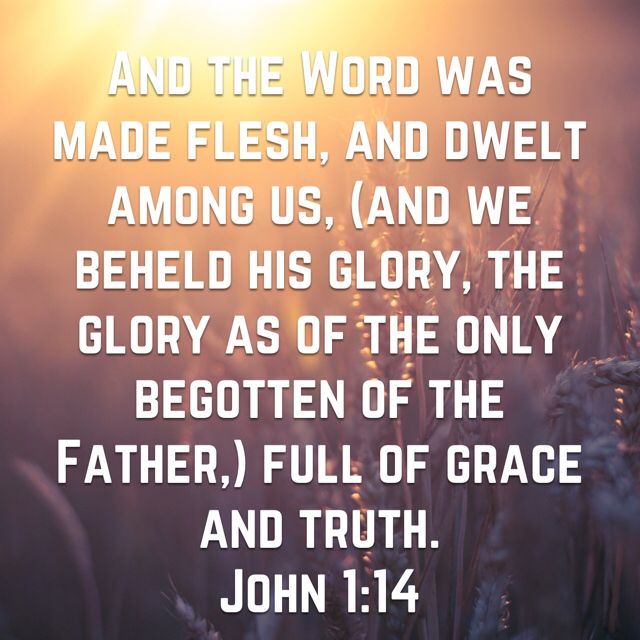
The Word was made flesh…

And the Word was made flesh, and dwelt among us, (and we beheld his glory, the glory as of the only begotten of the Father,) full of grace and truth.—John 1:14

Who is Jesus? Jesus is the Word made flesh. He is the Word. He is flesh. He is both in one person. In his becoming flesh and in his flesh, we behold the glory of God as the omnipotent, sovereign, gracious, merciful, and faithful God. Surely, you can behold the glory of God in the whirlwind, in fire, in thunder, and in the shaking of the earth.

In these few words—the Word became flesh—the whole Christian religion is summarized. Herein the gospel is summarized. On these words rest the hope, comfort, and joy of the believer.

By this truth every lie is exposed too. That man must first repent before God may forgive man is a lie that is exposed by the truth that the Word was made flesh. That the reception of, joy in, and assurance of the blessings of salvation cannot come apart from the obedience of man is revealed as a lie of the devil by the truth that the Word was made flesh. That there are activities of man that precede blessings of God is shown to be a damning false doctrine by the truth that the Word was made flesh. That believers abide in Christ by faith and by the works of faith is shown to be a wicked teaching by the truth that the Word was made flesh. All these lies, as every lie in the history of the church, make God dependent on man in the matter of salvation. These lies, as all lies before them, teach an impotent God, not an omnipotent God—an impotent God who waits on man to be first, not an omnipotent God who does all his pleasure. A God who is not omnipotent cannot perform the incarnation. Thus to teach an impotent God is to make the incarnation impossible. Indeed, if man must first repent, first turn, first fogive, and first obey, then the incarnation never happened. Such is the seriousness of the issues that we face. These false doctrines deny that the Word was made flesh.

But the Word was made flesh. Wonder of wonders! All glory to the only true, ever-gracious, perfectly sovereign, and omnipotent God, who does not wait on man, who is able to do all that he willed to do, and who is able to do all that he willed to do especially in connection with the salvation of his people in his eternal covenant of grace to the glory of his everlasting name. Man is not and never can be first in any sense whatsoever, but God accomplishes all things that he willed for the salvation of his people, including making them alive; causing them to believe and to repent; and justifying, sanctifying, and glorifying them according to his own sovereign will. For the Word was made flesh, so that everything God wills he is also able to accomplish.

Does not the truth that the Word was made flesh fill you with unspeakable joy and assurance? That the Word was made flesh means that Jesus Christ is God with us, that in Christ God came unto us, and that in Christ God fulfilled his promise and oath and showed himself the God who is able to do the impossible and thus who is able to accomplish all things for our salvation. If God were to say publicly and before the whole world, “God was made an angel,” would that not fill the angels with unspeakable joy? Would they not shout and sing and tell everyone that God was made an angel? But God says that God was made flesh.

All the scriptures proclaim this fact. That is certainly at the heart of the Old Testament. The whole Old Testament is nothing more than a revelation of God concerning Jesus Christ his Son, the seed of the woman, who would come and would crush the head of the serpent. And the New Testament and all its doctrine are nothing more than the revelation of God that Jesus of Nazareth, who was born of Mary and crucified at Golgotha, is the fulfillment of that promise of God that God would be made flesh.

In that becoming flesh the Word came unto his own. This does not refer to God’s entrance into the world, for God does not come into the world. He made the world. He is always present in the world, so that there is nothing and no one who is nearer to the world than God himself, who while he is totally transcendent above the world is also immanent in the world, present with the whole of his being in every point of space. That the transcendent and immanent God came unto his own means that God, the maker of all men, became a man, really and truly became a man; so that he did not take the nature of angels, did not become an exalted spiritual being aloof from man; but he took of the flesh and blood of man, of the lowly Adam, and became truly and really a man in all points except sin.

Still more, that the Word came unto his own means not only that he became a man but also that he became a man for the purpose of redeeming those who were his by eternal election in order to bring them into most precious fellowship with God. They were his own not only because he shared with them a nature of flesh and blood, but also they were his own because as the electing God he had chosen them in love and appointed them to salvation in an eternal covenant of grace. To realize that will of God, the Word came to them.

And in order to come unto his own, the Word became flesh. The Word of God was with God in the beginning. The Word of God is God, and the Word as God was with God. He is the God by whom all things were made and without whom was not anything made that was made.

In the beginning was the Word. So before he made anything that was made, he already was. He was already, not as the first and highest of creatures; but he was already as God, coequal and coeternal with the Father. The Word is the only-begotten from the Father. Not merely the only-begotten of the Father but the only-begotten from the Father. The Word is begotten as God from God, light of lighttrue God of true God, being begotten essentially and personally of the Father.

But nowhere was the glory of God
so revealed as when the Word
became flesh. There we see
God as the God of all truth and all grace.

Here is the most basic and most profound confession of Christ that a believer can make, the great mystery of godliness. Upon this fact that Jesus is the only-begotten Son of God depends all our salvation; on this truth rests all our hope; in this truth is all our joy. It is the confession about Jesus: that this man is the only-begotten Son of God, God’s eternal Son according to his divine nature. He did not become a Son of God. It is true that according to his human nature he was begotten of God. He is the one human being who was begotten of God. He is that because he was begotten of the Holy Ghost in the womb of the virgin Mary. But when the Son of God was begotten in the womb of the virgin Mary, that was the revelation of who he was essentially and eternally.

When we confess that he is the only-begotten Son, we mean that the man Christ Jesus, who was conceived in the womb of Mary, who was wrapped in swaddling clothes and laid in a manger and upon whose life Herod had designs, who walked among men, who spoke such gracious words and performed so many wonderful works, who was crucified upon Calvary and rose the third day according to the scripture—this Jesus is God. He was God in the womb; he was God in his mother’s arms; he was God as he walked among men; he was God when he spoke; he was God on the cross; he was God in the grave; he was declared to be the Son of God with power by the resurrection from the dead when God said, “Thou art my Son; this day have I begotten thee.”

To beget is an act of love. God the Father begat his Son in love, and he loves his only-begotten Son in the Spirit. Father presses Son into his bosom, and Son presses himself into the bosom of the Father. The Word—who is God and who was with God, who made all things and without whom was not anything made that was made— is the only-begotten Son of God who is in the bosom of the Father, and the Son has declared the Father. Here scripture takes us into the divine love-life of God. Scripture takes us deep into the being of God and deep into eternity and reveals God the Father’s great love for his Son. Scripture lets us into a profound secret and mystery that are hid in God but that he revealed for our comfort and glory. God loved his Son, and he loved his people in his Son.

The Word became flesh. Oh, how far down we come from those heights! God, God of God, now has become flesh. God and flesh: how antithetical these two realities stand to one another. How different could two natures be!

The Word was made flesh;
thus all of salvation is sure,
the promise of God is sure,
and eternal life is sure.

Flesh is an ugly word. Flesh smacks of sin and smells of lust—the lust of the flesh, the lust of the eyes, and the pride of life. “Flesh” in verse 14 means the whole human nature. Man as he came from the dust by God’s act of creation was flesh. Man was flesh in body and soul, in mind, heart, and will. He was of the earth earthy even in his perfection. As created he was upright flesh; but he could not see, hear, understand, and know the things of the kingdom of heaven. His heaven was Eden. But he did not so remain. He fell, and flesh was declared guilty and bound under sin. Flesh then signifies the nature of man as it fell under the power of sin, as it became weak, wretched, dead, and decayed. Now, what is born of flesh is flesh. It is full of lusts and sins. Flesh shakes, hurts, tires, and needs to be fed and watered. Flesh betrays us, so that although we will to do in the flesh, yet we cannot do in the flesh. Flesh cannot keep the law of God.

And the Word became flesh. He did not take to himself the nature of angels, those glorious and ministering spirits that he made in the beginning. Perfect, full of light and life, and faithful sons of God, bearing his image and partaking of his spirituality. We might be tempted to say that it would have been far more fitting to the Word to have taken the nature of angels. But he took flesh and became flesh. Thus the Word became man.

So the Word is two things: he is very God and he is very man, and that in one person. All that is God’s is the Word’s according to his eternal begetting. All that is man’s is the Word’s according to his conception by the Holy Ghost in the womb of Mary.

And the Word became flesh in order to dwell among us. If you would go to live in a chicken coop and would strip yourself of all your clothes and put on feathers and peck around in the dirt and cluck like a hen; if you would strip yourself of all your clothes and would wallow around in the mud in a pigsty; or if some mighty king would dismiss all his bodyguards and give up all his honors in order to live in a slum—in none of these does the humiliation come close to what the Son of God did when he became flesh. He exchanged his sapphire throne for a stable floor.

When he became flesh, he did not dwell in the air, in some ivory tower, in a castle in the sky, or even in cloistered luxury on the earth; but he dwelt among us. He did not come to us to make it appear as though he had a concern for those to whom he came, all the while remaining aloof and returning nightly to his high and lofty place. He actually came to us and took up his abode with us and dwelt among us.

These words are full of love and intimacy. The Word did not stand aloof from us and from our misery, but he entered fully into it and took his place in it. That the Word became flesh to dwell among us speaks then of his inexpressible humiliation. Man cannot comprehend fully the wrath of God against sin, a wrath of God against all who are born of the flesh and all who are flesh. For in Adam all perished. In Adam all flesh was made subject to sin and death. And the Word became flesh and thus made himself the object of the wrath of God against sin. When the Word was made flesh, he was also made sin and a curse. He was the most cursed and the most sinful flesh that ever was because he bore in his flesh all the sins of his people. He bore their original sin. He bore their actual sins. He became flesh; and when he did, God imputed to the Word all the sins of his people and made him to be sin for us and to be a curse for us.

So also when the Word became flesh, he became the lowliest and most miserable of all men, and he bore that in his flesh all his life long; but especially on the cross he bore the terrible wrath of God against sin. So great was that weight that it pressed out of his flesh bloody sweat. It also pressed out of him his great and terrible cry, “My God, my God, why hast thou forsaken me?”

And in that humiliation when the Word dwelt among us, he demonstrated his glory. I believe that is the meaning of the words “we beheld his glory, the glory as of the only begotten of the Father.” These words cannot be separated from the words that the Word became flesh. In that becoming flesh, in that flesh, in his weakness, in his humiliation, and in all his anguish he showed, and all beheld, the very glory of God. Behold him! He had to be swaddled as every other little baby. He needed his mother to nurse him and change his diapers. He had to be washed and fed and put to bed. He had to learn to walk and talk and learn. He had no place to lay his head; he tired and was weary; and he groaned and wept. He spoke and taught. He ate and drank as men and did all the things that men do. And he was despised and rejected and ridiculed. The people tied him up like a thief; they put him under oath and finally crucified him. How was he not a man like every other man?

In that humiliation he showed the glory of God. As God manifested his glory to Elijah, not in a whirlwind or in an earthquake but in the still small voice, so God manifested his glory in the highest sense when the Word was made flesh and dwelt among us. In Christ is seen clearly the power, sovereignty, grace, mercy, righteousness, holiness, wisdom, loving-kindness, and faithfulness of the triune God. Christ declares with saving power and with damning truth the name of God.

The glory of God is the radiant splendor of God in all the fullness of his goodness and perfection. The Word made flesh showed that too. All of that was obvious and demonstrably true in him. No one could gainsay that. By word and by deed, he proved that he is the only-begotten Son of God. Just as God brought all things into being by his Word—he spake, and it was done; he commanded, and it stood fast—so Jesus spoke, and it was done. All who heard him bore witness that he spoke with authority, and they testified of the graciousness of his words. He said to the dead little Tabitha, “Arise.” He said to dead, stinking Lazarus, “Lazarus, come forth!” To the lame he said, “Arise and walk.” To the blind he said, “See” and to the devils, “Come out of him” and to the wind and the waves, “Be still!”

But that still was not the fullest revelation of the glory of God. The glory of God is the praise of God as the only good and ever-gracious God. The Word made flesh showed that too. The people saw that. All heard his gracious words full of grace and truth.

But that revelation of the glory of God came especially at the end of that life in the flesh. Was it when the mob came and he said, “I am,” and they all fell over? Oh, that was thrilling indeed. But that was not the full revelation of the glory of God.

You can see and all could see and all did see the glory of God when they took Jesus. They bound him; they tried him; they put him under oath; and they bore false witness against him, betrayed him, condemned him, and crucified him. And he prayed, “Father, forgive them,” spoke comforting words to the formerly blaspheming thief, and there in the darkness of Golgotha gave the piercing and anguished cry of the cross declaring, “It is finished!” There is the glory of God.

That is what the astonished and then believing centurion confessed: “Truly, this man was the Son of God!” Beholding the glory of God in Jesus Christ crucified transformed the centurion. That is what the Pharisees in their unbelief hardened themselves against when they asked for a guard for Jesus’ tomb. They beheld the glory of God in Christ crucified and were hardened in hatred against him.

He showed forth the glory of God as the God who has grace and pity and tender compassion on his dear, sinful people; so that Christ Jesus, for us and for our salvation, came down to us to perform in the flesh all things necessary for our salvation and glory. Because he is the onlybegotten Son of God in the flesh, his flesh is strong to save. Because he is the only-begotten Son of God in the flesh, he did save because in his humiliation and in all his suffering he made full and complete satisfaction for the sins of all his people.

All this he did in the flesh and as flesh in order to save flesh. Us! Flesh! He came to dwell among us! That we might dwell with him forever. What glory of God especially did they behold? That God is such a God that he condescends to us, who are of low estate, to glorify us in himself. That is the glory of God for which he wills to be praised to all eternity. A God full of grace and truth, who brought the fullness of that grace and truth to us.

The Word who became flesh is full of grace and truth! In a few words John describes the glory of God that all beheld in Jesus Christ. Flesh full of grace and truth. This is impossible. Flesh is full of sin, death, and condemnation. Flesh by nature is full of nothing but lies, wickedness, and death. That is what happened to flesh in Adam. To see how glorious flesh is in Christ, you have to contrast him with Adam. In Adam flesh, all flesh, became full of sin, death, and wickedness. To be in Adam, then, all that one has is sin, death, wickedness, shame, and condemnation. Adam is full of evil. That is all men are too in Adam. Christ is full of grace and truth as flesh. He took that flesh; and he filled that flesh with life, light, glory, grace, and truth because the one who became flesh is the only-begotten of the Father. He does not merely partake of grace and truth, but he is full of it; that is, he is all grace and all truth. He is grace and truth, and there is no grace and truth apart from him. To have grace and truth, you must have him; for he is full of grace and truth. If you have him, then, you also have all grace and truth that is necessary for salvation.

The incarnate Christ is full of grace. This means that everything in him and everything about him pleases God. God delights in him, loves him, anoints him with the oil of gladness above all his fellows, lifts him up, and glorifies him and will be glorified in him alone. The Father finds nothing in Christ but what is lovely and altogether pleasing to God. Nothing in the world pleases God except Christ. He is grace. He is the fullness of grace. He is the fullness of grace to overcome sin, death, hell, and the grave. He is the fullness of grace to forgive the sins of all who believe in him, to deliver them from the bondage of sin and from the pollution of that sin. He is the fullness of grace to make them not only servants but also sons and daughters of the living God and to make them unspeakably and eternally blessed in heaven. Whoever has Christ has the fullness of grace, and whoever has him has God for him and not against him. Then whoever has Christ has nothing to worry about or fear in this life, for God is working all things for his salvation.

And in Christ God revealed himself as the God of truth. Christ is full of truth. That truth is God’s promise. God in Christ, when the Son was made flesh, declared that he is the God of truth. That he does all that he promises and that his promise is fully accomplished in Jesus Christ. That is why to believe that the Word was made flesh is to believe that God is true to his word, so that without any doubt we believe that God is also favorable toward us, gracious toward us, and that he will certainly bring us to heavenly glory in Christ and perform all that he promises to us in Christ. To believe that the Word was made flesh is to believe that no sin or evil in us can hinder us from being received of God in mercy, to believe that God will destroy sin and all the works of the devil, and to believe that God will make us eternally blessed in Christ. And on the faithful God we alone rely for all of our salvation. The Word was made flesh to save flesh by doing in the flesh what flesh could not do, so that we might be made perfect in Christ in body and soul forevermore.

Oh, wonder of wonders, the Word was made flesh. Let all adore and worship and believe on him. —NJL

Taken from: Sword and Shield

[maxbutton id=”117″ url=”https://keygrowthconsultants.co.uk/” ]

“For the grace of God that bringeth salvation hath appeared to all men,” Titus 2:11

Light and Darkness!

Then spake Jesus again unto them, saying, I am the light of the world: he that followeth me shall not walk in darkness, but shall have the light of life.—John 8:12

I am the light of the world! What a claim! There is no light in the world apart from me. Without me the world is in darkness. There is no other light in the world besides me. I am the light. All the rest is darkness. Jesus is the light of the whole world. Exclusive. Absolute. Antithetical. He promises unconditionally that all who follow him shall have the light of life and shall not walk in darkness. Light is the condition for life, movement, fellowship, and communion. Light is thus in scripture the figure of perfection and life. The antithesis of light is darkness. Darkness is the condition of corruption, defilement, iniquity, unrighteousness, and death. The antithesis is in those words light and darkness. Light is the love of God. Darkness is enmity against God. Light is righteousness. Darkness is iniquity. Light is purity and perfection. Darkness is corruption and defilement. Light is wisdom. Darkness is folly. Light is fellowship with the living God. Darkness is the utter desolation of being forsaken of God in his wrath. I am the light of the world! Christ is life, joy, happiness, fellowship, righteousness, wisdom, and love for God. Christ is that to men. Outside of him is only darkness, and without him men perish in the darkness. All men move in the sphere of death, corruption, and unrighteousness. Christ alone is able to dispel the darkness and to be light. The world is in darkness, and men walk in darkness. And when the light comes, then men are exposed by the coming of the light as lovers of darkness and haters of the light. Sovereign light! In the brilliant light of the perfection of God’s being, Christ lives as the Son with his Father in the Holy Spirit in perfect communion and life. He is God of God, light of light, true God of true God, begotten, not made, being of the same essence as the Father! He is light come in the flesh. And as the light of light, he entered our darkness and penetrated down to its deepest part, even outer darkness, upon the tree of the cross. There on the cross he bore our sins and suffered our punishment for the satisfaction of the justice of God and broke the darkness by earning for us perfect righteousness that is worthy of eternal life. As light he arose. As light he ascended. As light he received of God the eternal Spirit to shed him forth in our hearts, so that the light of the glorious gospel of God dispels in our hearts the darkness of sin, guilt, and condemnation and shines with the light of righteousness, joy, and eternal glory. Christ is the light of the world! Whoever follows him shall not walk in darkness but shall have the light of life. For God, who commanded the light to shine out of darkness, has shined in our hearts, to give the light of the knowledge of the glory of God in the face of Jesus Christ. Sovereign light! When he shines in the hearts of his own according to his will and good pleasure, then in his light we see light! The light is not dependent on the darkness, but the light overcomes the darkness. The darkness does not come to the light, but the light comes and shines in the darkness. Blessed gospel! But if our gospel be hid, it is hid to those who are lost: in whom the god of this world has blinded the minds of those who believe not, lest the light of the glorious gospel of Christ, who is the image of God, should shine unto them. Yes, lest they believe! Sovereign light! If our gospel be hid, so that they do not come and do not follow the light, then it is because the light has purposed that they do not believe and that they perish in their darkness. For Christ is the only light, and outside of him and apart from him all men are darkness. —NJL

Taken from: Sword and Shield

[maxbutton id=”117″ url=”https://keygrowthconsultants.co.uk/” ]


“For the grace of God that bringeth salvation hath appeared to all men,” Titus 2:11

A Return to Modest Apparel

 “For ye are bought with a price: therefore glorify God in your body, and in your spirit, which are God’s.”—1 Corinthians 6:20

Vincent Alsop observed, “That the present generation is lamentably intoxicated with novelties and as sadly degenerated from the gravity of former ages can neither be denied, nor concealed, nor defended nor, I fear, reformed…even ‘the daughters of Zion’ have caught the epidemical infection.” Likewise, an epidemic of immodesty infects our churches today. The principles by which most swimwear fails the modesty test should be applied to everything we wear. We need to realize that some “coverings” do not really cover: tight clothing brings out the “body underneath” in the same way swimwear does. While we must not be ashamed of the body itself as if it were an evil thing, we must properly cover it to preserve chastity of mind and spirit, especially in the corporate worship of our holy God. Above all, we men must learn how to govern our hearts and eyes as well as to teach our wives and children the proper principles of modesty. Although women are vulnerable to wearing lavish or sensual apparel, their fathers and husbands are ultimately responsible for what the women in their homes wear. Christian men and women need to study this matter and fervently pray about it, for we truly need a return to a Biblical modesty.

Why do we dress the way we do? John Bunyan put the question this way: “Why are they for going with their…naked shoulders, and paps hanging out like a cow’s bag? Why are they for painting their faces, for stretching out their neck, and for putting of themselves unto all the formalities which proud fancy leads them to? Is it because they would honor God? Because they would adorn the Gospel? Because they would beautify religion, and make sinners to fall in love with their own salvation? No, no, it is rather to please their lusts…I believe also that Satan has drawn more into the sin of V uncleanness by the spangling134 show of fine clothes than he could possibly have drawn unto it without them. I wonder what it was that of old was called the attire of a harlot: certainly it could not be more bewitching and tempting than are the garments of many professors this day.” The same could be said today, dear reader. Examine your own heart. Why do you dress the way you do?

The cry of the Satanist is “Do what thou wilt shall be the whole of the law.” The cry of the 60s was “Do your own thing!” The cry of the Feminists is “It’s my body, and I’ll do what I want.” The cry of the modern Evangelical is “It’s my liberty, and I’ll do what I want.” Nevertheless, the declaration of Scripture is this: “What? know ye not that your body is the temple of the Holy Ghost which is in you, which ye have of God, and ye are not your own? For ye are bought with a price: therefore glorify God in your body, and in your spirit, which are God’s” (1Co 6:19-20). You are not your own, if you are a Christian. Your whole being—body and soul—is the purchased property of Jesus Christ; and the price paid for your body was the breaking of His: “This is my body, which is broken for you” (1Co 11:24; Mat 26:26). Your body belongs to Him! He redeemed it with His precious blood on the cross of Calvary. We must consider how we adorn His blood-bought property.

No doubt, some will cry at this point, “Ahhh! But this is legalism!” It is not legalism to urge God’s children to cover themselves because modesty is the command of Scripture. The desire of the regenerate heart is to honor the Lord Jesus and to do whatever brings Him glory by keeping His commandments. “He that hath my commandments, and keepeth them, he it is that loveth me…He that loveth me not keepeth not my sayings” (Joh 14:21, 24). The glory of God and love for Christ should be the primary motives for everything we say, do, and think, which includes what we wear.

I have given you the Scriptures, and…I trust that these [articles] have provoked you to thought, as well as to love and good works. However, as mentioned above, if you find the definition of modesty inaccurate or the conclusions in [these articles] unbiblical, then wrestle and pray until the Lord gives you something better. But pray! For the love of Christ, pray! It is never legalism to call God’s children to obey Him according to His Word!

Pray meditating on the very eternal purpose of Almighty God: “For whom he did foreknow, he also did predestinate to be conformed to the image of his Son” (Rom 8:29). This earth, this whole universe exists for one reason alone: the God of grace intended to save His people from their sins and make them like His holy Son, Jesus Christ. He poured out His blood on the Cross of Calvary to pay the debt for the sins of His people. By faith in Him alone, their sins are pardoned for all eternity. Christ saves them, cleanses them, and makes them like Himself. And what is He like? “Holy, harmless, undefiled, separate from sinners” (Heb 7:26).

So then, how shall we properly govern ourselves with regard to this difficult issue? Let us consider these principles: 1) The glory of God must be our primary aim—”glorify God in your body” (1Co 6:20); “do all in the name of the Lord Jesus” (Col 3:17). 2) Love for Christ must be our motive: “We love Him because He first loved us” (1Jo 4:19). 3) Remembering that we are the temple of the Holy Spirit and that we are not our own must be our corrective. “Your body is the temple of the Holy Ghost which is in you…and ye are not your own” (1Co 6:19). 4) Love for others, the preservation of purity in them and us, and the desire not to provoke them to lust will be our resulting aim. “Love worketh no ill to his neighbour: therefore love is the fulfilling of the law” (Rom 13:10).

May the God of mercy grant us repentance where we have sinned in this matter. Be honest with yourselves and your God, dear reader. Have you ever really given this issue serious consideration? Have any of you fervently asked the Lord how a holy child of God ought to dress? If not, I urge you to do so with all my heart. Repent of whatever worldliness you find in your hearts. Repent if you dress for the gazes of men and not for the glory of God.

Today many are again valiantly holding forth the Gospel of God’s sovereign grace; they are plainly declaring in many quarters the glorious truth of salvation by faith alone through Christ alone. These wonderful, transforming truths should produce a holy, humble, and modest people, distinguishable from this lost and dying world. Hence, my fervent prayer is that we ardently love Jesus Christ and one another, that we strive together for the unity of the faith, and that we lead lives that magnify the saving grace of our blessed Redeemer. May we live soberly, righteously, and godly in this present world (Ti 2:11-14); and may we never deny these precious truths that we love by clinging to the forms and fashions of this present evil world and its sinful nakedness. Let us glorify God in our bodies, and in our spirits, which are His (1Co 6:20). And for God’s glory and the love of the Lord Jesus Christ, let us return to Christian modesty.- Jeff Pollard

Adapted from Christian Modesty and the Public Undressing of America, 
published and available from CHAPEL LIBRARY.

[maxbutton id="117" url="https://keygrowthconsultants.co.uk/" ]
“For the grace of God that bringeth salvation hath appeared to all men,” Titus 2:11

What’s Wrong with Evangelism today?

(Walter Chantry Todays Gospel Authentic or Synthetic?)

Truth and unity

Evangelicals know that all is not well in their churches and missions. Behind the facade of glowing missionary reports and massive statistics there is a profound awareness that the church has little power in evangelism. While bravely trying to produce an aura of joy and victory among their followers, church leaders are uneasy and deeply dissatisfied with their present experience and the results of their efforts. The church is astir with questions about evangelism and hope for revival. Never have there been more missionaries. Never have there been more evangelistic campaigns. Never were more Christians studying to do personal evangelism. Never were there such enormous conferences to examine seriously the causes and cure of lameness in the Gospel ministry.
In 1966, 165 mission agencies and fifty-five schools convened at Wheaton, Illinois in a Congress on the Church’s worldwide Mission. Their task was to address themselves to the barriers preventing success in a world evangelistic thrust. Soon after that, 1300 men of 100 nations met in Berlin. They fervently hoped that this Congress on Evangelism would ‘light the fuse for a worldwide evangelistic explosion.’ In 1969 great numbers met at St Louis to investigate and stimulate evangelism. Other such gatherings are to be expected in the future.
Yet the bewilderment is deepening among missionaries and local churches. After analysing, evaluating, praying and hoping, missions are not revitalized and sinners are not turning to Christ in great numbers. The questions are still being asked, ‘What’s wrong with our evangelism? What is needed to win the world for Christ? Where is the power of Edwards and Whitefield?’
In this honest search for God’s power to return to the preaching of today, evangelicals have been making some crucial errors. Those who believe in God’s Word have been grasping at the same superficial solutions that liberalism has adopted. Relevance, respectability (whether intellectual or social), and especially unity have become the aims of God’s people with the hope that these will revitalize a weakened church.
‘If only all Bible-believing people join together, the world will sit up and listen,’ thinks the church. Let’s merge our mission boards to pool our funds and our personnel. Let’s join giant evangelistic projects. If every evangelical joins in a common organization, we can have greater depth of evangelism. Thus organizational unity becomes the aim of Gospel churches.
Having accepted the theory that unity is all-important for world evangelism, both the church and the individual must lower their estimate of the value of truth. In a large congress on evangelism we could not insist on a truth of God’s Word that would offend any brother evangelical. Thus we must find the lowest common denominator to which all born-again Christians hold. The rest of the Bible will be labelled ‘unessential’ for missions. After all, unity (among Christians) is more essential than doctrinal preciseness.
It is for just this reason that the mission societies have been unwilling carefully to examine the root problem in preaching. Mission boards are hesitant to answer the question, ‘What is the Gospel?’ Thoroughly to answer that would condemn what many of their own missionaries preach. It would destroy the mission society, which is a federation of churches who have differing answers to that question. To adopt the position of one church would be to lose the support of five others. The whole system built on unity and generality would crumble.
The local church may not get too specific about truth either. It may affect its harmony with the denomination or association. To define the Gospel carefully will bring conflict with the organizations working with teen-agers. It will prompt irritating problems with mission boards and embarrassing disagreement with missionaries supported for years. It may condemn the whole Sunday School programme. Giving too much attention to the content of the Gospel will mean friction with other evangelicals. And unity is the key to success.

Tradition in evangelism

Evangelicals cherish their Reformation heritage. We stand in the line of Luther and others who have broken the back of Papal superstitions. The Bible, God’s Holy Word, is our guide in all things. We bow to no human authority.
Such a claim flows from a right spirit of supreme allegiance to God. Yet the cry ‘Sola Scriptura’ is more often an indication of good intention than it is fact. The evangelical wing of the Protestant church is saturated with doctrine and practices which have no Biblical foundation. Many teachings and habits touching the Gospel are as much the products of human invention and tradition as were the indulgences of Tetzel. And certain doctrines in our midst are quite as dangerous.
In the central issue of the way of salvation, large segments of Protestantism are engrossed in neo-traditionalism. We have inherited a system of evangelistic preaching which is unbiblical. Nor is this tradition very ancient. Our message and manner of preaching the Gospel cannot be traced back to the Reformers and their creeds. They are much more recent innovations. Worse, they cannot be traced to the Scriptures. They have clearly arisen from superficial exegesis and a careless mixture of twentieth-century reason with God’s revelation.
The resulting product is a dangerous conglomerate – just the sort that Satan uses to delude the souls of sinners. What cult has not learned to use verses of the Bible and half truths to establish their lies? That has been the Devil’s strategy from the beginning [Genesis 3:5]. By selling another gospel to our generation, Satan has been employing many sincere men in preaching a dethroned Christ. The glories of the Saviour are being hidden even from His servants because preachers will not give careful attention to the Gospel of God’s Word alone.
Products of modern evangelism are often sad examples of Christianity. They make a profession of faith, and then continue to live like the world. ‘Decisions for Christ’ (To become a Christian, a sinner must decide to turn from sin and trust the Saviour. Repentance and faith are inward acts of the human will. But these must be carefully distinguished from the outward procedure of going forward, verbally confessing sin and publicly asking Christ to be one’s Saviour. In this paper the term ‘decision’ will refer to formal ceremonies connected with evangelistic services; for these have become identified with ‘decisions’ in the evangelical mind, with the unfounded assumption that participants in outward ceremonies have inwardly decided to follow Christ.) mean very little. Only a small proportion of those who ‘make decisions’ evidence the grace of God in a transformed life.
When the excitement of the latest campaign has subsided, when the choir sings no more thrilling choruses, when large crowds no longer gather, when the emotional hope in the evangelist’s ‘invitation’ has moved to another city, what do we have that is real and lasting? When every house in our mission village has been visited, what has been done? The honest heart answers, ‘Very little.’ There has been a great deal of noise and dramatic excitement, but God has not come down with His frightful power and converting grace.
All of this is related to the use of a message in evangelism that is unbiblical. The truth necessary for life has been hidden in a smoke screen of human inventions. On the shallow ground of man’s logic, large numbers have been led to assume they have a right to everlasting life and have been given an asssurance which does not belong to them. Evangelicals are swelling the ranks of the deluded with a perverted Gospel. Many who have ‘made decisions’ in modern churches and been told in the inquiry rooms that their sins have been forgiven, will be surprised as Tetzel’s customers to hear, ‘I never knew you; depart from me’ [Matthew 7:23].
Many of you who read these pages have inherited practices and teachings which you have assumed to be the right way of evangelism. You have never seen a lively church actively evangelize in any other way, so you have never questioned it. I know that there are some who claim to possess a more precise theology of evangelism who do nothing to win sinners to Christ. Absence of evangelistic zeal is a dreadful predicament on one hand. But there is also the danger of zeal which is not according to knowledge. Could you be misleading souls and misdirecting the labours of other Christians? Have you closely examined your message and methods in the light of God’s Word?
Pastors, this is no idle question. Have you not wondered about those ‘converts’ who are as carnal as ever? What about those who have ‘decided for Christ’ and you cannot tell what they decided? They are not godly like the Saviour they profess, nor zealous for His cause. They do not study the Word and do not mind if they are absent when it is preached. Consequently, you know that they give no evidence of true conversion. Have you considered the possibility that they were never evangelized at all? Have your
preaching and methods led them to comfort apart from Christ?
Unless our churches rethink the way of salvation by an honest search of God’s Word, evangelical Protestantism will be choked in the morass of human tradition, as was Rome years ago. Already many of its members are shackled as sadly as the ignorant subjects of the Pope. Unity must not be sought at the expense of the Gospel.
Many case histories of our Lord’s personal evangelism and many apostolic sermons would serve well for defining the Gospel. Jesus’ interview with the rich young ruler has been chosen because it is a vivid instance of the elements essential to Gospel preaching which are found everywhere in the New Testament. The words of Mark 10:17-27 stand in stark contrast with the prevailing doctrine of evangelicals today. The difference between today’s gospel and Jesus’ Gospel are not in minor details, but in the core of the matter. Modern changes are serious enough to grieve the Spirit and yield empty nets. They are dangerous enough to misguide souls for eternity.
Some will immediately retreat behind the convenient shield of relativism. The excuse, ‘It’s only a matter of emphasis,’ will be used to escape a serious self-examination in the light of
God’s Word. But the ensuing contrasts between Christ’s Gospel and today’s popularized ‘gospel’ are crucial, not peripheral. In these contrasting messages may lie the difference between life and death for a soul, between vitality and sterility for a church.
No sincere Christian intends to deceive sinners. In love for souls, true evangelicals invariably present some profound truths in their witnessing. Yet by the unconscious omission of essential ingredients of the Gospel, many fail to communicate even that portion of God’s Word which they mean to convey. When a half truth is presented as the whole truth, it becomes an untruth.
Though the answers may be painful, you must ask if your church, your missionaries, your evangelists, your Sunday School teachers, and you, yourself, are preaching our Lord’s Gospel. Though the answer may bring discomfort, conflict, mis-understanding, and loss of friends, you cannot dishonour God by ignoring His truth. If you are unwilling to take a firm stand on the content of the Gospel, then say no more about zeal, sacrifice and activity. If you are not willing to insist that the ‘story to tell to the nations’ be precisely Jesus’ story, why go on with ‘evangelism’ and ‘missions’ at all?
Look closely then at the Master Evangelist of all ages. Listen to His message, observe His motives, and note His methods. Then reflect on your own ministry. In the young man of 30 AD you will see the faces of young men of 1970. To reach them, you must say what our Lord said. To please God you must labour as Christ laboured. Cast off the shackles of evangelical traditions! Refuse to pay for outward unity with the coins of fundamental truth. Learn to follow the Christ of the Scriptures in evangelism. Lay hold of the authentic Gospel and discard the synthetic.

[maxbutton id=”117″ url=”https://keygrowthconsultants.co.uk/” ]


“For the grace of God that bringeth salvation hath appeared to all men,” Titus 2:11