John Calvin’s prayers as he went through the book of Zephaniah

Verses. 1-4

The word of the LORD which came unto Zephaniah the son of Cushi, the son of Gedaliah, the son of Amariah, the son of Hizkiah, in the days of Josiah the son of Amon, king of Judah. I will utterly consume all things from off the land, saith the LORD. I will consume man and beast; I will consume the fowls of the heaven, and the fishes of the sea, and the stumblingblocks with the wicked; and I will cut off man from off the land, saith the LORD. I will also stretch out mine hand upon Judah, and upon all the inhabitants of Jerusalem; and I will cut off the remnant of Baal from this place, and the name of the Chemarims with the priests. KJV

PRAYER

Grant, Almighty God, that as we are so prone to corruptions, and so easily turn from the right course after having commenced it, and so easily degenerate from the truth once known,-O Grant that, being strengthened by thy Spirit, we may persevere to the end in the right way which thou showest to us in thy word, and that we may also labour to restore the many who abandon themselves to various errors,; and though we may effect nothing, let us not yet be led away after them, but remain firm in the obedience of faith, until having at length finished all these contests, we shall be gathered into that blessed rest which is prepared for us in heaven, through Christ our Lord. Amen.

Verses 5-9

And them that worship the host of heaven upon the housetops; and them that worship and that swear by the LORD, and that swear by Malcham; And them that are turned back from the LORD; and those that have not sought the LORD, nor enquired for him. Hold thy peace at the presence of the Lord GOD: for the day of the LORD is at hand: for the LORD hath prepared a sacrifice, he hath bid his guests. And it shall come to pass in the day of the LORD’S sacrifice, that I will punish the princes, and the king’s children, and all such as are clothed with strange apparel. In the same day also will I punish all those that leap on the threshold, which fill their masters’ houses with violence and deceit. KJV

PRAYER

Grant, Almighty God, that as we continue in so many ways to provoke against us thy wrath, we may patiently bear the punishment, by which thou wouldest correct our faults, and also anticipate thy judgment: and since thou art pleased to recall us in due time to thyself, let us not turn deaf ears to thy counsels, but so obey and submit ourselves to thee, that we may become partakers of that mercy, which thou offerest to us, provided we seek to be reconciled to thee, and so proceed in thy service, that under the government of Christ thy Son, whom thou hast appointed to be our supreme and only king, we may so strive to be wholly devoted to thee that thou mayest be glorified through our whole life, until we become at length partakers of that celestial glory, which has been procured for us by the blood of thy only-begotten Son. Amen.

Verses 10-12
 
And it shall come to pass in that day, saith the LORD, that there shall be the noise of a cry from the fish gate, and an howling from the second, and a great crashing from the hills. Howl, ye inhabitants of Maktesh, for all the merchant people are cut down; all they that bear silver are cut off. And it shall come to pass at that time, that I will search Jerusalem with candles, and punish the men that are settled on their lees: that say in their heart, The LORD will not do good, neither will he do evil. KJV

PRAYER

Grant, Almighty God, that as almost the whole world breaks out into such excesses, that there is no moderation, no reason,-O grant, that we may learn not only to confine ourselves with in those limits which thou dost approve and command, but also to delight and glory in the smallness of our portion, inasmuch as the wealth, and honours, and pleasures of the world so fascinate the hearts and minds of all, that they elevate themselves into heaven, and carry on war, as it were, avowedly with thee. Grant also to us, that in our limited portion we may be in such a way humbled under thy powerful hand, as never to doubt but that thou wilt be our deliverer even in our greatest miseries; and that ascribing to thee the power over life and death, may feel fully assured, that whatever afflictions happen to us, proceed from thy judgment, so that we may be led to repentance, and daily exercise ourselves in it, until we shall at length come to that blessed rest which is laid up for us in heaven, through Christ our Lord. Amen.   

Verses 13-Ch.2:2
 
Therefore their goods shall become a booty, and their houses a desolation: they shall also build houses, but not inhabit them; and they shall plant vineyards, but not drink the wine thereof. The great day of the LORD is near, it is near, and hasteth greatly, even the voice of the day of the LORD: the mighty man shall cry there bitterly. That day is a day of wrath, a day of trouble and distress, a day of wasteness and desolation, a day of darkness and gloominess, a day of clouds and thick darkness, A day of the trumpet and alarm against the fenced cities, and against the high towers. And I will bring distress upon men, that they shall walk like blind men, because they have sinned against the LORD: and their blood shall be poured out as dust, and their flesh as the dung. Neither their silver nor their gold shall be able to deliver them in the day of the LORD’S wrath; but the whole land shall be devoured by the fire of his jealousy: for he shall make even a speedy riddance of all them that dwell in the land. Gather yourselves together, yea, gather together, O nation not desired; Before the decree bring forth, before the day pass as the chaff, before the fierce anger of the LORD come upon you, before the day of the LORD’S anger come upon you. KJV

PRAYER

Grant, Almighty God, that we continue in various ways to provoke thy wrath, we may at length be awakened by the blasting of that trumpet which sounds in our ears, when thou proclaimest that thou wilt be the judge of the world, and testifies also the same so plainly in the gospel, so that we may, with our minds raised up to thee, learn to renounce all the depraved lusts of the world, and that having shaken off our torpidity, we may so hasten to repent, that we may anticipate thy judgment, and so find that we are reconciled to thee, as ever to retain the taste of it, in order that we may be enabled to renounce all the allurements and pleasures of this world, until we shall at length come to that blessed rest, where we shall be filled with that unspeakable joy, thou hast promised to us, and which we hope for in Christ our Lord. Amen. 

Chapter 2:3:8


Seek ye the LORD, all ye meek of the earth, which have wrought his judgment; seek righteousness, seek meekness: it may be ye shall be hid in the day of the LORD’S anger. For Gaza shall be forsaken, and Ashkelon a desolation: they shall drive out Ashdod at the noon day, and Ekron shall be rooted up. Woe unto the inhabitants of the sea coast, the nation of the Cherethites! the word of the LORD is against you; O Canaan, the land of the Philistines, I will even destroy thee, that there shall be no inhabitant. And the sea coast shall be dwellings and cottages for shepherds, and folds for flocks. And the coast shall be for the remnant of the house of Judah; they shall feed thereupon: in the houses of Ashkelon shall they lie down in the evening: for the LORD their God shall visit them, and turn away their captivity. I have heard the reproach of Moab, and the revilings of the children of Ammon, whereby they have reproached my people, and magnified themselves against their border. KJV

PRAYER

Grant, Almighty God, that as thou hast been pleased to consecrate us as peculiar people to thyself, we may be mindful of such an invaluable favour, and devote ourselves wholly to thee, and so labour to cultivate true sincerity as to bear the marks of thy people and of thy holy Church: and as we are so polluted by so many of the defilements of our own flesh and of this world, grant that thy Holy Spirit may cleanse us more and more every day, until thou bringest us at length to that perfection to which thou invitest us by the voice of thy gospel, that we may also enjoy that blessed glory which has been provided for us by the blood of thy only begotten son. Amen.

Chapter 2:9:15


Therefore as I live, saith the LORD of hosts, the God of Israel, Surely Moab shall be as Sodom, and the children of Ammon as Gomorrah, even the breeding of nettles, and saltpits, and a perpetual desolation: the residue of my people shall spoil them, and the remnant of my people shall possess them. This shall they have for their pride, because they have reproached and magnified themselves against the people of the LORD of hosts. The LORD will be terrible unto them: for he will famish all the gods of the earth; and men shall worship him, every one from his place, even all the isles of the heathen. Ye Ethiopians also, ye shall be slain by my sword. And he will stretch out his hand against the north, and destroy Assyria; and will make Nineveh a desolation, and dry like a wilderness. And flocks shall lie down in the midst of her, all the beasts of the nations: both the cormorant and the bittern shall lodge in the upper lintels of it; their voice shall sing in the windows; desolation shall be in the thresholds: for he shall uncover the cedar work. This is the rejoicing city that dwelt carelessly, that said in her heart, I am, and there is none beside me: how is she become a desolation, a place for beasts to lie down in! every one that passeth by her shall hiss, and wag his hand. KJV

PRAYER

Grant, Almighty God, that as thou triest us in the warfare of the cross, and arouses most powerful enemies, whose barbarity might justly terrify and dishearten us, were we not depending on thine aid,-O grant, that we may call to mind how wonderfully thou didst in former times deliver thy chosen people, and how seasonably thou didst bring them help, when they were oppressed and entirely overwhelmed, so that we may learn at this day to flee to thy protection, and not doubt, but that when thou becomes propitious to us, there is in thee sufficient power to preserve us, and o lay prostrate our enemies, how much soever they may exult and think to triumph above the heavens, so that they may at length know by experience that they are earthly and frail creatures, whose life and condition is like the mist which soon vanishes: and may we learn to aspire after that blessed eternity, which is laid up for us in heaven by Christ our Lord. Amen.

Chapter 3:1-5


 Woe to her that is filthy and polluted, to the oppressing city! She obeyed not the voice; she received not correction; she trusted not in the LORD; she drew not near to her God. Her princes within her are roaring lions; her judges are evening wolves; they gnaw not the bones till the morrow. Her prophets are light and treacherous persons: her priests have polluted the sanctuary, they have done violence to the law. The just LORD is in the midst thereof; he will not do iniquity: every morning doth he bring his judgment to light, he faileth not; but the unjust knoweth no shame. KJV

PRAYER

Grant, Almighty God, that inasmuch as thou hast deigned to favour us with an honour so invaluable, as to adopt us for a holy people to thee, and to separate us from the world,-O grant, that we may not close our eyes against the light of thy truth, by which thou showest to us the way of salvation; but may we with true docility follow where thou callest us, and never cast away the fear of thy majesty, nor mock thee with frivolous ceremonies, but strive sincerely to devote ourselves wholly to thee, and to cleanse ourselves from all defilements, not only of the flesh, but also of the spirit, that by thus seeking true holiness, we may aspire after and diligently labour for that heavenly perfection, from which we are yet far distant; and may we in the meantime, relying on the favour of thy only-begotten Son, lean on thy mercy; and while depending on it, may we ever grow up more and more into that true and perfect union, reserved for us in heaven, when we shall be made partakers of thy glory, through Christ our Lord. Amen.

Chapter 3:6-9


I have cut off the nations: their towers are desolate; I made their streets waste, that none passeth by: their cities are destroyed, so that there is no man, that there is none inhabitant. I said, Surely thou wilt fear me, thou wilt receive instruction; so their dwelling should not be cut off, howsoever I punished them: but they rose early, and corrupted all their doings. Therefore wait ye upon me, saith the LORD, until the day that I rise up to the prey: for my determination is to gather the nations, that I may assemble the kingdoms, to pour upon them mine indignation, even all my fierce anger: for all the earth shall be devoured with the fire of my jealousy. For then will I turn to the people a pure language, that they may all call upon the name of the LORD, to serve him with one consent. KJV

PRAYER

Grant Almighty God, that since it is the principal part of our happiness, that in our pilgrimage through this world there is open to us a familiar access to thee by faith,-O grant, that we may be able to come with a pure heart to thy presence: and when our lips are polluted, O purify us by thy Spirit, so that we may not only pray to thee with the mouth, but also prove that we do this sincerely, without any dissimulation, and that we earnestly seek to spend our whole life in glorifying thy name, until being at length gathered into thy celestial kingdom, we may be truly and really united to thee, and be made partakers of that glory, which has been procured for us by the blood of thy only-begotten Son. Amen. 

Chapter 3:10-13

From beyond the rivers of Ethiopia my suppliants, even the daughter of my dispersed, shall bring mine offering. In that day shalt thou not be ashamed for all thy doings, wherein thou hast transgressed against me: for then I will take away out of the midst of thee them that rejoice in thy pride, and thou shalt no more be haughty because of my holy mountain. I will also leave in the midst of thee an afflicted and poor people, and they shall trust in the name of the LORD. The remnant of Israel shall not do iniquity, nor speak lies; neither shall a deceitful tongue be found in their mouth: for they shall feed and lie down, and none shall make them afraid. KJV

PRAYER

Grant, Almighty God, that since the depravity of our nature is so great, that we cannot bear prosperity without some wantonness of the flesh immediately raging in us, and without becoming even arrogant against thee,-O grant, that we may profit under the trials of the cross; and when thou have blest us, may we with lowly hearts, renouncing our perverseness, submit ourselves to thee, and not only bear thy yoke submissively, but proceed in this obedience all our life, and so contend against all temptations as never to glory in ourselves, and feel also convinced, that all true and real glory is laid up for us in thee, until we shall enjoy it in thy  celestial kingdom, through Christ our Lord. Amen.

Chapter 3:14-20


Sing, O daughter of Zion; shout, O Israel; be glad and rejoice with all the heart, O daughter of Jerusalem. The LORD hath taken away thy judgments, he hath cast out thine enemy: the king of Israel, even the LORD, is in the midst of thee: thou shalt not see evil any more. In that day it shall be said to Jerusalem, Fear thou not: and to Zion, Let not thine hands be slack. The LORD thy God in the midst of thee is mighty; he will save, he will rejoice over thee with joy; he will rest in his love, he will joy over thee with singing. I will gather them that are sorrowful for the solemn assembly, who are of thee, to whom the reproach of it was a burden. Behold, at that time I will undo all that afflict thee: and I will save her that halteth, and gather her that was driven out; and I will get them praise and fame in every land where they have been put to shame. At that time will I bring you again, even in the time that I gather you: for I will make you a name and a praise among all people of the earth, when I turn back your captivity before your eyes, saith the LORD. KJV

PRAYER

Grant, Almighty God, that as we are at this day so scattered on account of our sins, and even they who seem to be collected in thy name and under thy authority, are yet so turn by mutual discords, that the safety of thy Church hangs as it were on a thread, while in the meantime thine enemies seek with savage cruelty to destroy all those who are thine, and to obliterate thy gospel,-O grant that we may live in quietness and resignation, hoping in thy promises, so that we may not doubt, but that thou in due time wilt become our deliverer: and may w so patiently bear to be afflicted and cast down by thee, that we may ever raise up our groans to heaven so as to be heard through the name of thy Son, until being at length freed from every contest, we shall enjoy  that blessed rest which is laid up for us in heaven, and which thine only-begotten Son has promised for us. Amen.   

“For the grace of God that bringeth salvation hath appeared to all men,” Titus 2:11

Damage of Counterfeit Currency

“Plausible are the ways in which men are seeking to justify this circulation of counterfeit currency in the spiritual sphere; it is perfectly right, we are told, so long as it is not found out.  That principle has even been ingeniously applied to the ordinary currency of the realm; if a counterfeit note were absolutely perfect, it has been said, so that by no possibility could it ever be detected, what harm should we be doing to a man if we passed it out to him with his change?  Probably it will not be necessary to point out—at least to the readers of the present book—the fallacy in this moral tour de force; and that fallacy would really apply to the spiritual currency as well as to five-dollar notes.  By circulating bad money we should be diminishing the value of good money, and so should be robbing the generality of our fellow-men.  But after all, that question is purely academic: as a matter of fact counterfeit notes are never sure not to be found out.  And neither is bad currency in the spiritual sphere.  It is a dangerous thing to encourage faith in what is not true, for the sake of the immediate benefits which such faith brings: because the greater be the building that is erected on such a foundation, the greater will be the inevitable crash when the crash finally comes.”

J. Greshem Machen, What is Faith?  page 179.

The above paragraph by Machen can be explained by looking at the function of money in an economy.  Every good and every service that might be purchased with currency has its value based on the currency.  One could add up into a sum the price of every good and every service in that economy.  Then he could figure out the total amount of money available for the purchase of all these goods and services.  There is a resulting relationship between the two.  That relationship works in both directions.  A price is given to the various good and services available.  In the other direction, the money that a man possesses has its power because it can be used to purchase those goods and services available.  He knows he can get so much for the money he has.  When a man gets his paycheck, he knows that he can buy the food he needs to feed his family.

Suppose that a counterfeiter has produced and passed into this economy exactly the same amount of the money already existing in an economy.  At first, prices remain the same, and the individuals who at first successfully pass off this counterfeit currency as genuine obtain the goods and services they produce for free.  But as this counterfeit currency works its way into the whole economy, all currency loses half its value.  Consequently, goods and services will double their cost.

Even more, suppose the counterfeit currency is discovered.  The economy is further damaged because people will no longer trust their currency.  They will not trust it when they receive it in the form of a paycheck, nor in business transactions.

What is the currency whose value is damaged by its counterfeit in our spiritual economy of salvation and assurance of salvation?

The believer’s assurance is grounded upon the righteousness of Jesus Christ alone, which righteousness is received through faith alone.

The teaching of assurance by good works diminishes the value of the righteousness of Jesus Christ.  It also diminishes the importance of faith alone by which that righteousness is received.  Assurance is by faith and good works.  Assurance is by the righteousness of Christ and good works.

Christ loses His value when good works are placed next to Him.  Faith loses its value when good works are placed next to faith.  Gratitude for salvation freely received into the heart and mind as the wondrously powerful motivation for all good works suffers.  Why do good works?  No longer because the believer has received, but because the believer must obtain.  What one thought he possessed fully by grace alone through faith alone is cast into doubt.  He must now get busy and perform necessary good works to get what he thought he already had.

“The doctrinal error . . . then compromises the gospel of Jesus Christ, for when our good works are given a place and function they do not have, the perfect work of Christ is displaced.”  (Acts of Synod 2018, Article 62, page 70)

We must also look at the very heart of the error.  “Our good works,” when they displace “the perfect work of Christ,” have two damaging effects on the work of Christ.  First, the work of Christ is no longer sufficient.  The believer’s good works must be brought in in to complete the ground for assurance.  Second, the believer’s good works are imperfect.  They do not match the perfection of God’s perfect law.  They are defiled with sin.  When those good works are brought next to the perfect righteousness of Jesus Christ, and both together made the cause or reason for assurance, the results are damaging.  Damage is done to perfection of the law, of Christ’s righteousness, and the believer’s assurance.  Not only does perfect assurance become impossible, as the believer attempts to gain better assurance by doing more good works.  His assurance must become weaker and weaker as he tries to pursue more and more imperfect good works.

This counterfeit currency also does damage to the doctrine that is precious to the church of Jesus Christ, the doctrine of salvation and assurance of salvation by grace alone, from Christ alone, by faith alone.  The addition of good works to this doctrine throws the word “alone” into doubt.  When the currency of “faith and good works” is passed along as genuine, and believers are told that their assurance depends on their faith and their good works, the doctrine that they have been taught before becomes questionable.  They may not trust what they have been taught, and what they had held as dear.  Questions arise in their minds about the old currency.  They can only doubt that their assurance, formerly based on Christ alone, was solid and true.  Now they must obtain an assurance that is true by good works that they must now perform in order to obtain this assurance.

Damage of Counterfeit Currency (2)

Damage of Counterfeit Currency

Properly to understand the damage of the teaching of doing good works in order to obtain assurance, the relationship between faith and good works must be clear.

There are two places in the Heidelberg Catechism that declare this relationship.  The first is Lord’s Day 32, Q&A. 86, which addresses the necessity of good works.  According to the answer Christ “also renews us by His Holy Spirit after His own image . . . that everyone may be assured of his faith by the fruits thereof.”  The other is Lord’s Day 33 which gives a definition of good works.  It is that first element of this definition that stands on the foreground: “only those which proceed out of a true faith.”

From these places the truth about good works is clearly established: good works proceed out of faith.

This simple and glorious truth about good works has several implications that are important to observe and keep in mind.  One implication is that faith is always prior to good works.  Another implication is that the sole source of good works is faith in the heart, and that faith as producing the good works.  Yet one more is that faith possesses Christ as the complete Savior before producing any good works.  In other words, faith resting in Christ alone produces good works because of Christ alone in that believer through faith.  He is the vine.  We are the branches.

Faith must be first, and faith alone must be first, before all the good works the believer does.

This truth is brought out in Reformed doctrine in two distinct ways.  First, the Reformed order of salvation is that of faith, justification, and sanctification.  This order means that justification and sanctification are by faith alone.  Second, good works proceed from the heart of the believer as the believer places his trust in Christ for all his salvation, justification, and sanctification, and glorification.  Another way to put the same thing is that the believer proceeds to his life of good works out of gratitude.  He has received by faith all the blessings of salvation that are in Christ Jesus his Lord.  Out of gratitude for what he has consciously received by faith alone, he lives a life of gratitude filled with good works to the glory of his Redeemer.

Thus, faith and the assurance of faith the believer possesses and enjoys prior to all the good works that he does.

The question becomes obvious: how can the believer work for that which he already possesses?  How can he possibly work to obtain that which he already has and enjoys by faith alone in Christ alone, without his works?

Turning now to the error that assurance is to be obtained by good works, the damage becomes evident.  The error makes good works occupy the same territory that faith alone is meant to.  As faith is simply trust and rest in the complete work of Christ as the only and the complete Savior, good works done by the believer are put into the same realm where the fullness of Christ alone is supposed to be.  This was the understanding of Synod 2018 when it decided this error displaced the perfect work of Christ.

First, damage is done to faith itself, and the nature of faith as rest and trust in Jesus Christ.

Good works become the standard for faith.  Faith is seen as another good work, alongside the good works of the law.  The command to believe the gospel stands alongside the other commandments of the law of God.  Faith then becomes obedience to that commandment to believe.  The deed of believing obtains the gifts of forgiveness of sin and eternal life, just as good works themselves are said to obtain assurance of salvation.

The damage is that faith as resting in the work of Christ as finished and complete fades into the background, along with the finished and complete work of Christ.  The damage is that faith as the spiritual bond that joins the believer to Jesus Christ ceases to have a place in the heart and mind of the believer.  The damage is that faith can no longer be seen as the distinct and glorious work of the Holy Spirit.  Faith becomes only a choice, a decision, a mere act of the will.

Second, damage is done to the spiritual character of good works.

Because faith and good works exist side by side in the believer’s life, good works will tend more and more to have the supremacy.  The believer can see his diligent efforts having their payoff in his good works.  They are more readily apparent to him as he does them.  Keeping the commandments outwardly he can note real progress in his life.  He finds the approval of men and is encouraged by it to continue in his pursuit of good works.  He is able to argue from his life of good works his claim to more assurance of faith.  What he sees comes to have more and more priority over what he believes, the visible over the invisible.

Focus moves to the external character of good works.  The law is seen more and more as a code of outward conduct, merely ruling over and regulating visible behavior.  The law speaks less and less of what the believer cannot do, and more and more of what he can do.  The law less and less points to the sins and depravity of the believer, to lead him to his need of Christ and His perfect righteousness and fulfillment of all the law of God.

Third, damage is done to the understanding of the church of Jesus Christ.  The church is moved from being the gathering of believers and their spiritual seed, to being the gathering of doers.  The gospel of salvation from sin through the blood of Jesus Christ loses its central place as satisfying the deepest need of God’s people and the wellspring of their life.  Taking over that central place is exhortation and motivation to live according to God’s law.  Practice becomes the theme instead of belief of the truth.

Similarly it becomes inevitable that certain good works become lauded and praised rather than others.  The second table of the law receives priority over the first.  Donations of large sums are praised and extolled over the widow’s mite.  Service trips and special projects receive much attention.  On the other hand, godly sorrow over sin, true conversion, and simply carrying on in one’s tasks in school, work, home and family to the glory of God is downplayed and can even be despised. Such is the damage of the counterfeit currency of the doctrine of assurance by good works.  Understanding this damage must make us so grateful for the decisions of our Synod that identified and rejected this doctrine. But it must also make us vigilant to ensure that this counterfeit currency never has any place among us.

(Rev. Martin VanderWal Posted on March 23, 2019)


“For the grace of God that bringeth salvation hath appeared to all men,” Titus 2:11

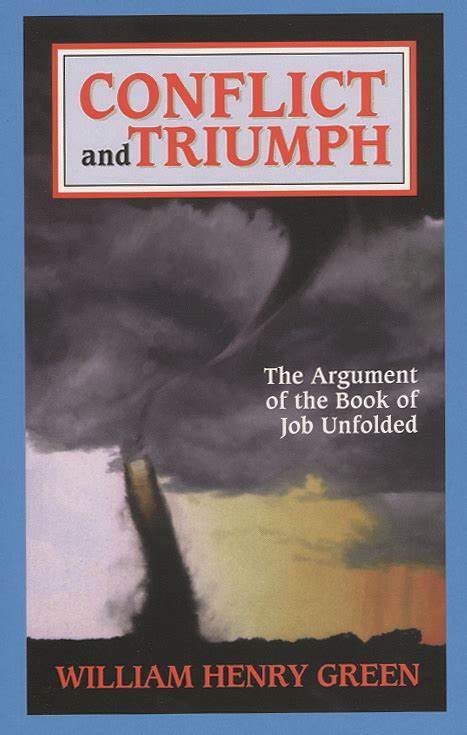
Conflict and Triumph by W. H. Green

SATAN

Again there was a day when the sons of God came to present themselves before the LORD, and Satan came also among them to present himself before the LORD. (Job 2:1 KJV)
And lead us not into temptation, but deliver us from evil: For thine is the kingdom, and the power, and the glory, for ever. Amen. (Matthew 6:13 KJV)

He who has any just sense of his own weakness and frailty, and of the frightful evil of sin, must be incessant in his entreaties that he may be upheld in steadfastness by an almighty arm, and guarded from the assaults of one who succeed even in enticing angels to their fall, and prevailed over our first parents in all the vigour of their early integrity, and to whom we shall prove an easy prey, unless One stronger than the strong man armed, interferes for our rescue. A proper sense of our peril will not only tend to beget the general conviction that in God alone is our help, but will, in addition, lead us to fasten upon those particular assurances and grounds of encouragement which are afforded by him for just such a crisis as this. The knowledge of the vast power of our spiritual adversary will lead us to take refuge in the omnipotence of God, to place a new value upon this glorious attribute, to avail ourselves of it as a basis of repose and confidence, to experience in our daily consciousness what it is to have a God of such infinite resources to supply our pressing need.  

The almighty power of God is then no longer an abstraction to us-an intellectual conviction-but a present practical necessity; not a perfection which we distantly contemplate, but one by which we live and without which we perish. The dire necessity which drives us to the fount of life is, in its results, and incalculable blessing. And the temptation of Satan which terrifies the soul out of all self-dependence and creature-dependence, and compels it to find refuge in an almighty Saviour, has accomplished a gracious end.

And with this, so with other perfections of the ever-blessed God, and with the precious promises of his Word, and with merciful provisions of the covenant of grace, and with the priceless salvation of our Lord Jesus Christ. The tempted soul learns afresh how to prize them, and embrace them, and cling to them, and rest upon them, and live by them.  (Pp. 20, 24)

“For the grace of God that bringeth salvation hath appeared to all men,” Titus 2:11

How could any Protestant go ‘home’ to Rome?

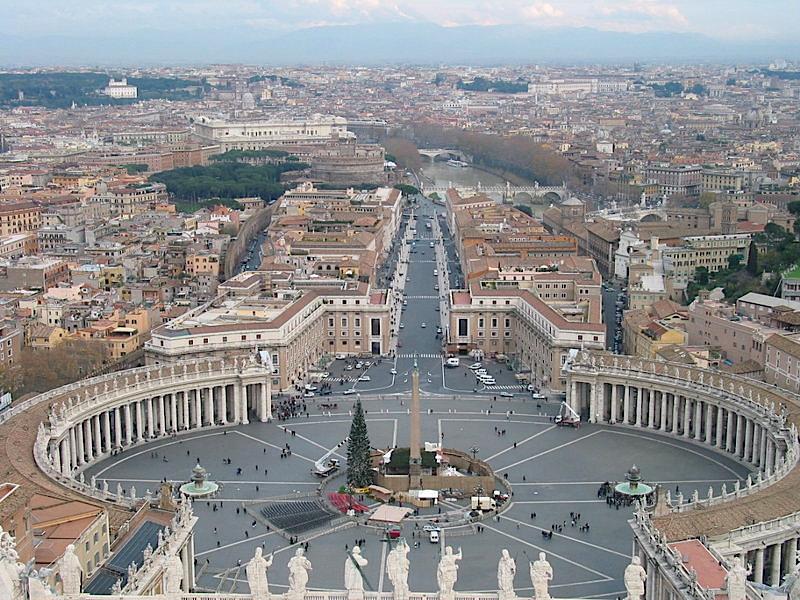
One year ago, I reported that many Protestants are ready to “cross the Tiber” into Roman Catholicism. The expression “crossing the Tiber” refers to fording the river that runs alongside Rome, symbolic of the barrier between Rome and Protestants. With grief, I had to report that even leaders in our mother church are talking about making the crossing.1 Some church leaders are sending not-so-subtle messages to members: It is permissible, and probably time, to unite with the Catholic Church. One Calvin Seminary faculty member wrote that Protestants and Catholics are “pilgrims on the same journey, serving one Lord with one faith” who “will come nearer to their goal if they walk together than if they walk separately.” If I had not read his words with my own eyes, I would have been disbelieving of such a report.

The campaign to bring Protestants (‘Evangelicals’) into Rome gained momentum from a 1995 project called ECT—Evangelicals and Catholics Together. ECT is an ad hoc committee that in 1995 published a major document, signed by influential Roman Catholic and Protestant leaders, expressing agreement in fundamental areas of doctrine and voicing commitment not to proselytize one another’s members. Since 1995, ECT has published at least nine more statements of unity in faith. Protestantism’s friendliness with Rome, however, has far deeper roots (down to the early 1900s) and a much wider reach than ECT (extending broadly into Protestantism).

In the year since I wrote that editorial, no other alarms have been raised about this movement. The silence in church magazines of conservative Protestantism is grievous. The original pushback in a few good books has seemed to end. A smattering of Internet articles speak out against it, but even these are not from the sources we would hope—Reformed and Presbyterian churches.2

Members of denominations whose leaders support this move to Rome ought to be up in arms. In churches that are silent, Christians ought to ask their leaders why no warnings are issued. Readers who have relatives and friends in denominations that lean toward Rome should equip them with good information, so they can take the action God requires of them: protest the leanings or leave those churches, for the salvation of their generations. Those inclined to join such a denomination where the children are not inoculated against false doctrine may be warned.

This is their warning, given in love for their souls: To go to Rome is to lose the gospel. There is no good news in Rome. In order to join Rome, those churches that call themselves Protestant must abandon the truth for which our fathers died and on account of which they left Rome. By definition, Protestants protest. Their protest was against Rome. By courting Rome, these Protestants abandon Protestantism.

How could it happen that churches so radically different historically could consider each other of the same faith and on the same journey?

Evangelicals (Protestants) and Catholics are coming together

Definition of a few terms is in order.

Catholics: A reference to Roman Catholicism, the world-wide religion based in Rome under the pope. To refer to followers of the pope merely as Catholics is mistaken since the real catholic, that is, universal church is the true church of Christ, not Rome. Followers of the pope are Roman Catholics.

Evangelicals: A term harder to define, but generally considered to be conservative Protestants. Protestants are non-Roman Catholic Christians, but these are conservative Protestants. They have not gone liberal in rejecting the authority of Scripture, the necessity of regeneration for salvation, miracles, the Virgin Birth, etc. Their claim to retain the gospel explains the label evangelical. So, Evangelicals have been the branch of Protestantism that seeks to maintain Reformation orthodoxy. They are found in most branches of Protestantism, from Lutherans to Baptists, Presbyterians to Pentecostals to Methodists.3

Together: A reference to reconciliation. Some Evangelicals and Roman Catholics desire to break down what walls still separate them. They meet unofficially to discuss common beliefs and assure one another that what differences exist between them fall into three categories: a great deal is simple misunderstanding or misrepresentation; much is explained by historical circumstances no longer applicable; discussing the rest will cultivate deeper mutual appreciation.

Ecumenical: Relating to a movement that aims at world-wide union of all Christian churches. The word comes from the Greek for “the inhabited world.” The “togetherness” that Protestants and Roman Catholics seek is nothing less than the complete unity of all Christian denominations, world-wide.

Roman Catholics and Evangelicals are reconciling. Evangelicals are ecstatic about the project. Roman Catholicism is on board, even though initially, in the early 1900s, it was cold toward any ecumenical efforts because of fear it would “lose its distinctive Catholic dimensions.” That changed in 1962 when the pope convened a major council (Vatican II) that brought the Roman Catholic Church into the ecumenical movement. Vatican II declared unity with their “separated brethren” one of the “principle and essential goals of the RCC.”4

How can this be?

How can it be that Evangelicals, most of whom formerly said “Catholics are not Christians,” are now able to see unity as possible, desirable, even necessary? And why is Roman Catholicism no longer fearful of losing its distinctives?

The answer has two parts: Evangelicals are no longer evangelical. And Roman Catholics are not changing but engaging in creative shapeshifting. Evangelicals are guilty of massive compromise of Reformation faith. Roman Catholics are back to their old tricks, guilty of subterfuge.

From the side of Evangelicals, consider three major factors that contribute to their ability to consider Rome their home. At the same time, ask whether your own church or family may be guilty of these weaknesses, and thus in your generations may be vulnerable to Rome, where there is no gospel.

  1. Ignorance of Scripture

Evangelicals can consider Rome as home because they are ignorant of the doctrines that stood at the heart of the Reformation. Rome has always depended on their sheep’s ignorance, but now Evangelicalism is destroyed for lack of knowledge. While some Evangelical leaders are educated, most of the common members are woefully ignorant. Public education (not Christian schools) is the norm and good catechetical instruction in Scripture and creeds is rare. This paves the way for the attitude that, as long as someone sincerely says “I love Jesus” and lives a moral life, he must be a Christian. A hundred years ago liberal Protestantism imploded from ignorance. Now, Evangelicals follow the same path. This time, to Rome.

  1. Distaste for battle

Formerly, Evangelicals understood that Christians must adopt a militant stance in the world. They understood the antithesis and knew that engaging in spiritual and theological battles was essential for the church’s existence. They wrote “Onward, Christian Soldiers” and sang it with conviction. Now, most have forgotten that the church is a battling church, that Christians are to be armed (Eph. 6:10-17). Many have removed the battle hymns from their songbooks and would sneer if you would tell them that your Lord is “a man of war” (Ex. 15:3). So when someone proposes that there are errors in the Roman church that must be fought, false teachings that must be destroyed in ecclesiastical battles, these Evangelicals react with surprise and dismay. Their misunderstanding of the peace-making calling of the church mutes their war cry.

  1. Abandonment of Reformation principles

The majority of Evangelical Christianity today has renounced the gifts God restored to His church at the Reformation. The reader who doubts this would do well to go to the bookstores and read what is published by major Christian publishers. It will soon be clear that churches have lost the marks of the true church: truth in preaching; proper administration of the sacraments—a part of the larger concept of biblical worship; and Christian discipline—a part of the larger reality of proper church government. Let me explain:

Church government. There is no pope in Evangelicalism, but there are many little ‘popes.’ They are the presidents of their ministries, the senior pastors (think CEOs) of their mega-churches, the celebrity speakers on the conference tours, the big names that make money for the publishing houses. How much weight do these heavyweights carry in their circles? How often do Christians look to them as their authority rather than Scripture?

Christian discipline. Christian discipline is “rare as a white crow,” as already 100 years ago Abraham Kuyper lamented was the case in the Netherlands. Accountability to a body of elders, and a plurality of males who exercise authority in the church, an authority checked by the priesthood of all believers who know the Scripture, are strange concepts in Evangelicalism today.

Biblical worship. Worship governed by Scripture has been lost, too. The importance of proper worship as a mark of the true church appears in Calvin’s somewhat surprising testimony during the Reformation. Orthodox teaching, he said, stood in the service of proper worship. In other words, for Calvin, God-glorifying worship was the chief thing; truth served worship. The sacraments show that in a unique way. Proper administration of the sacraments involves both doctrine and worship. What the Roman Catholic church taught about the sacraments show that in a unique way. Proper administration of the sacraments involves both doctrine and worship. What the Roman Catholic church taught about the sacraments denied the gospel and, therefore, how they used the sacraments in worship robbed God of His honor.

What has happened in Evangelicalism with regard to worship and the sacraments is no less tragic because, although the form of their corruption of worship and the sacraments is different, it is just as dishonoring to God. Evangelicalism’s loss of proper worship is explained by the abandonment of the “regulative principle of worship.” How to worship is no longer governed by the rule of the second commandment but left to the judgments of men and women. Regarding the sacraments, baptism either is denied covenant children, or it is considered unimportant. And the ‘fence’ around the Lord’s table was broken down when discipline fell away, so that the supper is profaned as badly in much of Evangelicalism as it is in Roman Catholicism. The Reformers would view Protestant worship today as smoking ruins. Weeping, they would say that the worship they died to restore is gone.

Could your generations end in Rome?

It is easy to point out the errors of apostate Evangelicalism. Of Romanism. Of others. But self-reflection is always in order. Let us take heed who think we stand. Remember, the demise of Evangelicalism did not happen overnight.

Ignorance. How thoroughly are we “taught of the Lord” (Is. 54:13)? Do we know, for example, what the RCC teaches about salvation by grace and justification through faith? How committed to reading and studying Scripture is my family? Is it our meditation all the day (Psalm 119:97)? How much time do we and our families spend in the Word, compared with leisure, sports, entertainment?

Authority. In a theological discussion, how inclined might we be to give more weight to the views of a man with a big name than to the plain teaching of Scripture? At the time of the Reformation, men did not care so much about what the Bible taught as they did about what ‘papa dixit’ (the pope says). Are we returning to this?

Discipline. Are we thankful for our elders, willing to engage in this work? Do we support and pray for them when discipline is exercised among us? How much do we initiate discipline (Matt. 18)? Do we discipline ourselves and our own children?  

Militancy. If we sometimes properly loathe battle because we are “for peace” (Ps. 120:7), are we nevertheless always willing to be armed, ready to fight? Are we always fighting sin within so that we understand the threat of sin every day? Do we teach our children to be good soldiers, to put on the armor, to pray for hands that war and fingers that fight (Ps. 144:1)?

Worship. Is the Lord pleased with our worship? Proper worship includes a humbled heart, a right spirit, genuinely dependent on the righteousness of Christ alone and deeply grateful that His grace has been extended to us. Is God any less displeased with worship that is outwardly proper when our hearts are not right than He is with the improper worship in Evangelicalism?

If we are not spiritually cautious in all these respects, what has happened to bring Evangelicalism to Rome could happen in our families or churches. It will not be the natural result, but the severe and righteous judgment of God. The lesson of Evangelicalism is that it does not take more than a couple generations.

____________

1 See my editorial of March 1, 2018, (Below) “Gathering at the river,” in which I referred especially to the Fall 2017 issue of Calvin Theological Seminary Forum entitled, “Reformation Reflections: What can Catholics and Protestants learn from one another today?” In this issue, five prominent members of the seminary propose rapprochement with the Roman Catholic Church.

2 The seminary gets dozens of magazines from a wide spectrum of churches. Most ignore it. One exception to this silence is The Trinity Review (trinityfoundation.org). Another are the works of D.G. Hart, most recently his, Still Protesting: Why the Reformation Matters, Grand Rapids: Reformation Heritage Books, 2018.

3 There are other uses of the word evangelical, for example, in some denominational names. These denominations are not necessarily associating themselves with “evangelicalism.”

4 This, and much information for this article, are from the pro-ECT book, Evangelicals and Catholics Together at Twenty: Vital Statements on Contested Topics, eds., Timothy George and Thomas Guarino (Grand Rapids: Brazos Press, 2015).

Preview article. This editorial is written by Prof. Barry Gritters
The 
Standard Bearer

Gathering at the river

No, not the Grand River in Grand Rapids, Michigan, where some of our spiritual relatives gathered after immigrating from the Netherlands in order to establish Reformed churches.1

But the Tiber River in Rome, Italy, where some of our ecclesiastical relatives are gathering today, there to destroy Reformed churches. They are there, ready to forsake Reformed tradition and join the Roman Catholic Church.

“Crossing the Tiber” is an old expression describing what a Protestant does when he leaves the Reformation faith for the Roman Catholic fold. The Tiber River ran alongside old Rome; to get to Rome, one crossed it. Thus, “crossing the Tiber” refers to entering the Roman Catholic enclave. Today, descendants of our Reformed fathers gather on the banks of the Tiber River, preparing to cross.

In the past few decades, some notable individuals have crossed the Tiber, the Romish hierarchy welcoming them heartily. The “erring brethren” (since Vatican II we Protestants are given the friendlier label “the departed brethren”) are finding their way into ‘Papa’s’ arms. Rome Sweet Home is the title of one book that gives the conversion testimony of two notable Tiber-crossers, Scott and Kimberly Hahn.2 The Hahns, a former Presbyterian minister and his seminary-educated wife, crossed separately in the late ’80s and early ’90s and became popular speakers on the Roman Catholic circuit, luring more Protestants to ford the river. Since then, many have followed. “The Coming Home Network” and “The Journey Home Program” are two flourishing organizations that both promote such conversions and support the defectors once they go “home” to Rome.

What may not be so well known to readers of the Standard Bearer is that the banks of the Tiber are swelling with crowds of nominal Protestants who show fervent interest in defecting. And yet more are considering how to get to those banks. Reformed and Presbyterian men and women. Most grievously, Reformed leaders, men and women, from our mother church.

The present editorial reports this with no ill-will, but with deepest sorrow and the ardent prayer that God will use it to inform and warn. Are some yet unaware of the leanings of their denominations, or of their relatives or friends?

“What can Protestants and Catholics learn from one another today?”

That question is posed on the cover of the recent Forum magazine, the newsletter of Calvin Theological Seminary, official seminary of the Christian Reformed Church (CRC). This newsletter reports on an October meeting between representatives of Calvin Seminary and the Roman Catholic Church (RCC). With some of Calvin Seminary’s staff were a Roman Catholic professor from Hope College (Holland, MI; college of the Reformed Church in America) and the Roman Catholic Bishop of Grand Rapids, who “brought their own voice to this important topic.” Participants discussed what they could “learn from one another and see as points of convergence….”

The President of Calvin Seminary notes that their previous Forum highlighted the five solas of the Reformation. Now, and “out of that framework,” is the seminary’s present issue, “What Can Catholics and Protestants Learn From One Another Today?” There was no attempt to explain how commonality with Rome fits in the framework of the solas of the Reformation.

The first article, by the Director of the Meeter Center for Calvin Studies and Editor of the Calvin Theological Journal, Karin Maag, examines Reformed and Romish unity in worship. Maag asks, rhetorically, “…are Reformed and Roman Catholic congregations still so far apart when it comes to worship?” and says that “steps are being taken to highlight areas of common agreement.” Both the CRC and Reformed Church in America (RCA) “formally signed the ‘Common Agreement on Mutual Recognition of Baptism,’ with the United States Conference of Catholic Bishops.” And there are long-running partnerships between local CRC congregations and RCC groups where “confessional differences shrink away.” Maag participated recently with Roman Catholics in a “panel discussion on how to commemorate the Reformation.” This last beggars belief: discussing with Rome how to celebrate the Reformation! This is not unlike the children of a man—who in grossest wickedness tried to kill their mother and still today is impenitent—children who have finally freed themselves from the man, now asking him to discuss with them how to celebrate his attempted murder. In the end, Maag urges that “arguments over who is more faithful to the teachings of Scripture and the practices of the Church throughout the ages tend only to reinforce divisions.”

The seminary’s Assistant Professor of Moral Theology, 3 Matthew Tuininga, believes that two forces reduced the antipathy between Protestants and Catholics in the twentieth century. First, in Vatican II, the RCC opened herself ecumenically (which certainly is the posture the RCC seeks to show). Second, “Protestants and Catholics alike came to view secularism and the increasing abandonment of Christianity as the far graver threat.” That is, the theological differences become relatively insignificant in light of the foes called secularism and paganism. Now read carefully his conclusion: “faithful Protestants and Catholics of all denominations will increasingly find that, as pilgrims on the same journey, serving one Lord with one faith, they will come much nearer to their goal if they walk together than if they walk separately.” Re-read that, without blinking, for its significance. If that is believed, Christian Reformed ministers will instruct their members that they and Roman Catholics are on the same journey, serve the same Lord, have one faith, and have the same goal. Thus, they must walk together.

The seminary’s Director of Communications wraps up with the report that speakers “noted shared beliefs and values…even around religious beliefs and practices such as the concept of Justification or the observance of the sacraments” (emphasis added). The evening concluded with a shared blessing on the event by the President of the Seminary and the Catholic Bishop.

It is as though the evening was spent entering coordinates into MapQuest to determine the best road from the Grand River to the Tiber. Has it ever looked more bleak for our mother church?

A stronger impetus and a wider road to the Tiber

But the CRC’s friendly leanings toward Rome give only a small glimpse into a much larger movement of Protestants hasting toward the Pope, with his devotion to Mary, rosaries and indulgences, patron saints, and the doctrine of purgatory.

When “Evangelicals and Catholics Together” (ECT) published their first ecumenical statement in 1994 (ECT: The Christian Mission in the Third Millennium), Protestant denominations were emboldened to meet in public with Rome’s delegations. Since then, ECT has been actively publishing statements, even if this further work has not had the publicity of 1994. Nine more statements have been ‘nailed on church doors’ (now, however, on Protestant church doors) on Justification, Scripture, the Communion of Saints, Sanctification, Abortion, the Virgin Mary, Religious Freedom, Marriage, and (in December of 2017) “the Christian Way.” In a preface to a collection of these statements,4 J.I. Packer calls those who oppose them “Evangelical isolationists,” serious condemnation of those who do not join them, and a forewarning of more severe condemnation to come. Timothy George, co-editor of the collection, is certain of the soon-coming day Protestants and Roman Catholics are “fully united in the common witness for which Jesus Christ himself prayed.”

The names of Protestants who took part in writing or who support these joint statements are notable.5 The following list is enough to give the reader an idea how prominent: Bill Bright, Bryan Chapell, Hans Boersma (formerly Canadian Reformed), Charles Colson, Frank James and Harold Brown from Reformed Theological Seminary,6 Peter Leithart, Peter Lillback, Max Lucado, Eric Metaxas, Richard Mouw, J.I. Packer, Joni Eareckson Tada, and Kevin VanHoozer. Finally, and most noteworthy for Standard Bearer readers, Dr. Laura A. Smit, ordained minister in the CRC and professor at Calvin College. These and hundreds more influential church leaders press for the unity of Protestants and Roman Catholics.

By the way, the fact that so many are interested in Rome presages the nearness of the end when the false church will persecute the true church who will not join her. For now the persecution may be merely pejorative labels—“isolationists!” Soon, there will be threats. But the true church must be prepared to die for her faith, as were Luther and the other Reformers whose traditions are being betrayed, even under the façade of celebrating their work. Unity apart from Scripture truth is not the unity “for which Jesus Christ himself prayed.”

An explanation

Such a strong movement toward Rome is astounding, but should not be surprising. The simple reason so many are able to anticipate “crossing the Tiber” is that the doctrine in many Protestant, even Reformed and Presbyterian, churches has so warped and deformed that it is more like Roman Catholic dogma than Reformation truth (deformation in liturgy and ethics is close behind). Combine this doctrinal deformation with the doctrinal illiteracy of the common member—sound catechism instruction of the youth has long disappeared in most denominations—and the heavy traffic on the roads to Rome is not at all surprising. If Calvin Theological Seminary can report “shared beliefs…even around… the concept of Justification,” there is not much truth yet to abandon before all their members recognize that the Tiber, at this point, looks to be a pretty narrow ford.

But the common denominator among these who desire to join in Rome is not agreement in theology, even the doctrine of salvation, significant as this agreement is. Instead, it is their united aim of world transformation, desire for the “common good,” for promotion of the “kingdom of God.” All their writings breathe such sentiments.

We may never weary of reminding each other and our children that the common grace goal of “transforming the world,” “renewing communities,” “redeeming creation,” and “seeking ‘shalom’ in the city,” is what binds these Reformation-abandoning groups together. They may have many other aspirations, but the one yen that binds them all is their will to Christianize the world, their hope that common grace will transform it into the “kingdom of God.” Protestants are abandoning their traditions—biblical traditions—for this. For this, our mother church relinquishes her Reformed heritage. Abraham Kuyper, what hast thou wrought?!

Our hearts’ desire for their salvation

We say the truth in Christ: we have heaviness and sorrow in heart. Our hearts’ desire and prayer is that those traveling Rome-ward might be saved. They have zeal, indeed, but not according to knowledge—saving knowledge governed by Scripture alone.

O, beware of Rome! Be members of the true church, for “out [outside] of it there is no salvation” (Belgic Confession, Art. 28).

Shall one of the churches’ Evangelism Committees sponsor a lecture that will explain the similarities between Roman Catholicism and the teaching and practice of contemporary Protestantism—and publicize it broadly in Reformed communities—so that some may yet be rescued? Shall a capable writer extend this effort and show clearly that Rome is not moving toward Protestantism, but Evangelicals toward Rome? Rome does not budge, despite its claims to be “open” to ecumenical dialogue. (As they say, ‘the mountain does not come to Mohammed.’) Let preachers in faithful Reformed and Presbyterian churches be clear in their public preaching and in their instruction of the youth in catechism. Let parents and preachers alike prepare the youth to attend the Christian colleges where they will face smart and amiable professors who may try to direct them to the roads that bend toward Rome.

With genuine love for those who remain in these churches angling Rome-ward, we call them loudly, clearly, urgently: “Come out from them or perish with them.”


1 The title of my editorial plays off the title of a book, Gathered at the River, which describes “Grand Rapids, Michigan, and its people of faith” (by James D. Bratt and Christopher H. Meehan, Grand Rapids, MI: Wm. B. Eerdmans, 1993).

2 Rome Sweet Home: Our Journey to Catholicism, San Francisco: Ignatius Press, 1993.

3 It may be worth noting that in Reformed seminaries historically this position was called “Professor of Ethics” and in Roman Catholic institutions “Professor of Moral Theology.”

4 All but the 2017 paper are included in the recent Evangelicals and Catholics Together at Twenty: Vital Statements on Contested Topics, “at twenty” referring to the twenty years since the first statement in 1994 (eds., Timothy George and Thomas Guarino, Grand Rapids, MI: Baker, 2015).

5 The difficulty of research to determine all the names is compounded by the fact that ECT has no website, calls itself an “ad hoc” and “informal” fellowship, whose statements have no “imprimatur or endorsement” from the churches of which the signers and endorsers are members (ECT at Twenty, 166). News of ECT will be found in the (mostly) Roman Catholic journal First Things.

“For the grace of God that bringeth salvation hath appeared to all men,” Titus 2:11

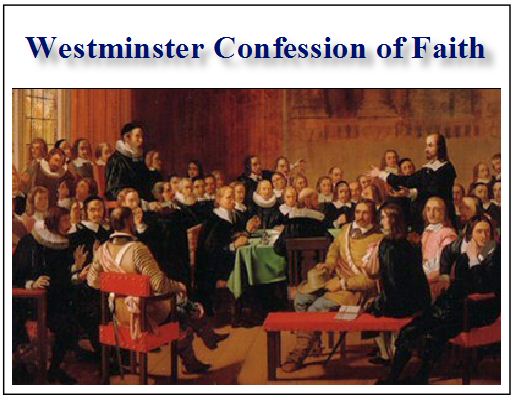
The Ten Commandments and The Fourth commandment.-Westminster Larger Catechism (1643-1648)

Authorized Version
Deuteronomy chapter 5:

v.11 Thou shalt not take the name of the LORD thy God in vain: for the LORD will not hold him guiltless that taketh his name in vain.

v.12 Keep the sabbath day to sanctify it, as the LORD thy God hath commanded thee.

v.13 Six days thou shalt labour, and do all thy work:

v.14 But the seventh day is the sabbath of the LORD thy God: in it thou shalt not do any work, thou, nor thy son, nor thy daughter, nor thy manservant, nor thy maidservant, nor thine ox, nor thine ass, nor any of thy cattle, nor thy stranger that is within thy gates; that thy manservant and thy maidservant may rest as well as thou.

v.15 And remember that thou wast a servant in the land of Egypt, and that the LORD thy God brought thee out thence through a mighty hand and by a stretched out arm: therefore the LORD thy God commanded thee to keep the sabbath day.

v.16 Honour thy father and thy mother, as the LORD thy God hath commanded thee; that thy days may be prolonged, and that it may go well with thee, in the land which the LORD thy God giveth thee.

v.17 Thou shalt not kill.

v.18 Neither shalt thou commit adultery.

v.19 Neither shalt thou steal.

v.20 Neither shalt thou bear false witness against thy neighbour.

v.21 Neither shalt thou desire thy neighbour’s wife, neither shalt thou covet thy neighbour’s house, his field, or his manservant, or his maidservant, his ox, or his ass, or any thing that is thy neighbour’s.

v.22 These words the LORD spake unto all your assembly in the mount out of the midst of the fire, of the cloud, and of the thick darkness, with a great voice: and he added no more. And he wrote them in two tables of stone, and delivered them unto me.


The Fourth Commandment

Question 115: Which is the fourth commandment?
Answer: The fourth commandment is, Remember the sabbath day, to keep it holy. Six days shalt thou labor, and do all thy work: but the seventh day is the sabbath of the Lord thy God: in it thou shalt not do any work, thou, nor thy son, nor thy daughter, thy manservant, nor thy maidservant, nor thy cattle, nor thy stranger that is within thy gates: For in six days the Lord made heaven and earth, the sea, and all that in them is, and rested the seventh day: wherefore the Lord blessed the sabbath day, and hallowed it.

Question 116: What is required in the fourth commandment?
Answer: The fourth commandment requires of all men the sanctifying or keeping holy to God such set times as he has appointed in his Word, expressly one whole day in seven; which was the seventh from the beginning of the world to the resurrection of Christ, and the first day of the week ever since, and so to continue to the end of the world; which is the Christian sabbath, and in the New Testament called the Lord’s day.

Question 117: How is the sabbath or the Lord’s day to be sanctified?
Answer: The sabbath or Lord’s day is to be sanctified by an holy resting all the day, not only from such works as are at all times sinful, but even from such worldly employments and recreations as are on other days lawful; and making it our delight to spend the whole time (except so much of it as is to betaken up in works of necessity and mercy) in the public and private exercises of God’s worship: and, to that end, we are to prepare our hearts, and with such foresight, diligence, and moderation, to dispose and seasonably dispatch our worldly business, that we may be the more free and fit for the duties of that day.

Question 118: Why is the charge of keeping the sabbath more specially directed to governors of families, and other superiors?
Answer: The charge of keeping the sabbath is more specially directed to governors of families, and other superiors, because they are bound not only to keep it themselves, but to see that it be observed by all those that are under their charge; and because they are prone ofttimes to hinder them by employments of their own.

Question 119: What are the sins forbidden in the fourth commandment?
Answer: The sins forbidden in the fourth commandment are, all omissions of the duties required, all careless, negligent, and unprofitable performing of them, and being weary of them; all profaning the day by idleness, and doing that which is in itself sinful; and by all needless works, words, and thoughts, about our worldly employments and recreations.

Question 120: What are the reasons annexed to the fourth commandment, the more to enforce it?
Answer: The reasons annexed to the fourth commandment, the more to enforce it, are taken from the equity of it, God allowing us six days of seven for our own affairs, and reserving but one for himself, in these words, Six days shalt thou labor, and do all thy work: from God’s challenging a special propriety in that day, The seventh day is the sabbath of the Lord thy God: from the example of God, who in six days made heaven and earth, the sea, and all that in them is, and rested the seventh day: and from that blessing which God put upon that day, not only in sanctifying it to be a day for his service, but in ordaining it to be a means of blessing to us in our sanctifying it;Wherefore the Lord blessed the sabbath day, and hallowed it.

Question 121: Why is the word Remember set in the beginning of the fourth commandment?
Answer: The word Remember is set in the beginning of the fourth commandment, partly, because of the great benefit of remembering it, we being thereby helped in our preparation to keep it, and, in keeping it, better to keep all the rest of the commandments, and to continue a thankful remembrance of the two great benefits of creation and redemption, which contain a short abridgment of religion; and partly, because we are very ready to forget it, for that there is less light of nature for it, and yet it restrains our natural liberty in things at other times lawful; that it comes but once in seven days, and many worldly businesses come between, and too often take off our minds from thinking of it, either to prepare for it, or to sanctify it;and that Satan with his instruments much labor to blot out the glory, and even the memory of it, to bring in all irreligion and impiety.

“For the grace of God that bringeth salvation hath appeared to all men,” Titus 2:11

How to Pray for Your Pastor

When Roman legions invaded Caledonia (modern-day Scotland) in the late first century AD, it was said by the historian Tacitus that the powerful Celtic chieftain Calgacus emerged and rallied his tribes against the might of Rome, famously declaring, “They make a desert, and they call it peace.”

Today’s Christian pastor is likewise making similar stands for biblical Christianity in the midst of a secular desert created by an anti-Christian culture. The Bible describes a faithful pastor as an elder who oversees the flock and the household of God. According to Paul, pastor/elders rule the church (Titus 1:5) and guard the treasures of Christ (v. 9). Additionally, they minister to the people by teaching, reproof, correction, and training in righteousness (2 Tim. 3:16).

If ever there was an era in Christian history that believers should be committed to praying for their pastors, it is now. James rebukes our prayerlessness when he says, “You do not have, because you do not ask” (James 4:2). And what prayers are we offering up to God on behalf of our pastors? Let me suggest several.

THAT HE WOULD DELIGHT IN PREACHING

If your minister is not being blessed and instructed by the Word, it is highly unlikely that you will be. Your spiritual well-being is directly linked to your pastor’s seeking the Lord in his preparation for the sacred desk. If he is not diligently seeking the Lord, you won’t find Him in his preaching either.

A godly pastor is a joyful, dutiful herald of the most high King. His enthusiasm for proclaiming God’s Word will be infectious and unstoppable, and it will be readily apparent to all who hear him that this is a man who knows his God. Second Timothy 4:1–2 reads:

I charge you in the presence of God and of Christ Jesus, who is to judge the living and the dead, and by his appearing and his kingdom: preach the word; be ready in season and out of season; reprove, rebuke, and exhort, with complete patience and teaching.

THAT HE WOULD ENJOY THE LORD’S DAY

I suspect that many people who sit week after week in the pews of their particular church have no idea how difficult a Sunday is for a minister and his family. Pray for your pastor’s Sundays. Robert Murray M’Cheyne says: “A well-spent sabbath we feel to be a day of heaven upon earth. … We love to rise early on that morning, and to sit up late, that we may have a long day with God.”

THAT HE WOULD LEAD HIS FAMILY WELL

Pray that God would help your pastor in the midst of busyness to taste and see that the Lord is good. Pray that his children would grow up loved and cherished in the household of faith. Joel Beeke says: “Family worship is the foundation of child rearing. As family worship goes, so will go the family. The Puritans thought family worship was the whole backbone of society.” We read in Deuteronomy 6:4–7:

Hear, O Israel: The Lord our God, the Lord is one. You shall love the Lord your God with all your heart and with all your soul and with all your might. And these words that I command you today shall be on your heart. You shall teach them diligently to your children, and shall talk of them when you sit in your house, and when you walk by the way, and when you lie down, and when you rise.

THAT HE WOULD HAVE A HEART FOR THE LOST

May your pastor have a Christlike love for the lost and a joy in telling others about the Shepherd-King. If a man loves the Lord, he will love telling others the old story of the gospel. He also will teach and model for others a renewed sense of evangelism and mission. He is worthy to receive the glory and honor due Him (Rev. 4:11). Christ, the Lamb of God who takes away the sin of the world, is worthy to receive the reward. We need our pastors to have a zeal for the lost.

THAT THE LORD WOULD PROTECT HIM

A growing personal relationship with Christ will supply the motivation and zeal needed for a pastor’s duty to God. It will be tiring. It will require an all-in, total commitment. Pray that God would provide every physical and emotional need for the call to serve. Pastors are often subject spiritual temptation, so pray for God to protect these men from the evil one. Pray that they would guard themselves and be granted personal holiness. Pray that they would apply the means of grace to their own hearts, by God’s help.

THAT HE WOULD PREACH THE GOSPEL

Thomas Smyth of the antebellum historic Second Presbyterian Church in Charleston, S.C., once charged a young pastor by saying:

Preaching is your pre-eminent employment, so the Gospel is the sum and substance of your preaching—the power of God and the wisdom of God unto salvation. 

Necessity is laid upon you, yea, woe is unto you if you preach not the Gospel. … Preach Christ as set forth in the Gospel—the sum and substance of God’s testimony, and the author of eternal salvation to all who believe upon him.

Preach—this glorious Gospel of good news—first and last, every way, and everywhere, in public and in private; in the pulpit and by the press; to the living and to the dying; to the lost and the saved.

Pray for your pastor, pray as if your very life and those you love depended upon it. Melton L. Duncan is a ruling elder at Second Presbyterian Church in Greenville, S.C

“For the grace of God that bringeth salvation hath appeared to all men,” Titus 2:11

Diseases of Souls by John Willison (1680-1750)

SERMON III. -“IS THERE NO BALM IN GILEAD!

IS THERE NO PHYSICIAN THERE! WHY THEN IS NOT THE HEALTH OF THE DAUGHTER OF MY PEOPLERECOVERED!” Jer. VIII. 22.

   The words being before explained, and the doctrine raised, I proceed to Doct. III. Viz. However desperate the diseases of those within the church may seem to be, yet if they die of them, it will be owing to themselves, seeing they have an able physician, an excellent balm to look to for healing.

   This being the doctrine which I chiefly intend to insist upon, I propose to do it at some length in the following method:
I. I will inquire into those dangerous diseases for which there is balm in Gilead, and a physician there.
II. Take notice of some of those dangerous symptoms which make our diseases appear desperate and incurable, for which there is yet balm in Gilead.
 III. Speak of the physician there, who hath the balm, and applies it for curing the diseased.
IV. Inquire into the nature of the balm, and means which the physician makes use of the healing.
V. Touch at the physician’s method of applying the balm, and performing the cure. 
VI. Make application of the whole.
I The first head is, to inquire into the dangerous diseases of those within the church for which the balm is provided. And for the better understanding hereof, I shall premise some things.
  1. When I speak of the church, I mean the church visible, which includes hypocrites as well as true believers.
   2.Though the strength and power of the soul’s diseases be broken in believers, by renewing grace, yet there is no disease in the unrenewed but believers are in part liable to it, and have the relics of it to groan under, while they are here below.
  3. I am not to speak of the diseases of the body natural, which is the province of physicians; nor of the body politic, or civil society, which is the business of politicians and statesmen: though in the meantime the abounding of those at this day is so visible to all, that we have ground to bewail and mourn over them before the Lord. Ah! The diseases of our body, both civil and ecclesiastic, are so great and lamentable, that we may justly apply that word to ourselves, which we have in Isa. i. 5, 6, “The whole head is sick, and the whole heart faint; from the sole of the foot even unto the head, there is no soundness in it, but wounds, bruises, and putrifying sores.” Such a case, indeed, is mournful, yet, blessed be God, it is not separate. There is balm in Gilead for the state as well as the church, and we should plead with the great physician in Israel to pity both, and heal their respective diseases. Thanks be to God that he is both able and willing, and that he gives us such promises to plead with him, as these following, in Isa. i. 25, 26, “And I will turn my hand upon thee, and purely purge away thy dross, and take away all thy tin. And I will restore thy judges as at the first, and thy counsellors as at the beginning; afterwards thou shalt be called the city of righteousness,” &c. And that in Isa. xlix. 22, 23, “Thus saith the Lord God, Behold I will lift up my hand to the Gentiles and set up my standard to the people; and they shall bring thy sons in their arms and thy daughters shall be carried on their shoulders; and kings shall be thy nursing-fathers, and their queens thy nursing-mothers,” &c. And that promise in Isa. lx. 17, 18, “I shall make thy officers peace, and thine exactors righteousness; violence shall no more be hears in thy land, wasting nor destruction within thy borders; but thou shalt call thy walls salvation and thy gates praise.” Now it is surely the duty of all the members of both church and state, to plead these promises with God, and to wait his time for accomplishing them to us. O what is there so hard, but the outpouring of his Spirit can do?
    4. The diseases which I propose to speak of in this place, are the sins of spiritual plagues and distempers of men’s souls. Which are very dangerous and deadly. These we ought all to know, with symptoms and effects, that we may seek after the balm in Gilead, which is mercifully provided of God for our healing. God would have every man to know the plague of his own heart, 1 Kings viii. 38. This every man should know and be acquainted with in the first place, in order to healing; though yet we are not wholly to confine our thoughts and care about those diseases which are private and personal, but show our concern also about those which are public and national; of which more afterwards. 
    5. These soul distempers are called in scripture, diseases, wounds, and sickness, Ps. xxxviii. 5; ciii. ; cxlvii. 3; Ezek. xxxvi. 4; Matt. ix. 12. Because they produce effects in the soul like to those which diseases produce in the body; such as, (1.) As diseases waste the beauty of the body, and produce uncomeliness and deformity in it, Ps. xxxix. 11. As they make the eyes sink and turn dull, the skin shrink up and gather blackness, the flesh melt away, and bones stick out, and the most beautiful person to look pale and ghastly; so our sins and spiritual distempers destroy the comeliness of the soul, deprive it of its primitive beauty, the image of God, and bring upon it a most ghastly deformity, and make it resemble both brutes and devils, the one in sensuality and lust, the other in pride and malice. (2.) As diseases weaken the body, and make it unfit for spiritual work and exercises, as prayer, hearing, meditating, &c. so that duty becomes a burden to it. (3.) As the diseases deprive men of their appetite for food, and of their digestion; so sin takes away the soul’s appetite and digestion, that it hath no hunger for the bread of life, for communion with God, and the influences of his Spirit; and though the man attends ordinances, he doth not digest what he hears, nor is nourished by it. (4.) Diseases occasion pain in the body that it cannot rest; so sin brings anguish and torture into the soul. Hence David complains of his bones being vexed, and his soul being sore vexed, Ps. vi. 2, 3. These things being promised, I shall mention some of those dangerous diseases of the soul for which we need the balm of Gilead. 
   Atheism. Infidelity, or misbelief of divine truths, revealed to us, is a deadly disease, for it hinders the success of the gospel, and the saving of souls. What is it that keeps many halting so long between two opinions, and hovering betwixt Christ and the devil, but heir not believing firmly the Bible to be God’s word, and the gospel tidings to be certain truth; namely, that God sent Jesus Christ, his eternal Son, into the world, to assume our nature, and die for sin instead; and their not giving firm credit to the being of a God, the immortality of the soul, and the life to come. Though many will not openly question any of these truths, yet the wavering thoughts they have about them hinder them from failing in with the gospel-method of salvation which God hath established. Ah! This is a deadly disease! Also, there is much practical atheism among us; many profess to won God, and yet live as if they believed there was no God that made the world, and no providence that governs it: they pay God no homage nor respect; they put the creature, or self, in God’s room; they ascribe their mercies to fortune, or to their own wisdom or industry, rather than to God. A woful disease! God’s children indeed are cured of prevailing atheism, yet the dregs of the disease remain; and sometimes atheistical thoughts come to a great height in them, as in Asaph, though afterwards he was heartily grieved and ashamed for entertaining them, and calls himself both a fool and a beast for it, Ps. lxxiii. 21, 22. And no wonder he did so, for atheism and infidelity, though it abound in the church, yet there is no such disease in hell, no such madness there, for the devils believe and tremble, James ii. 19. But though the disease be grievous, yet Christ hath balm for it, and to him we must go both to help our unbelief and increase our faith.

IGNORANCE OF GOD,
and of gospel truths, is a mortal disease, and destroys many, even of those who profess to know him, according to Hos. iv. 6. There are multitudes living in the midst of gospel light, who yet continue in gross darkness. They are ignorant of the infinite justice and holy nature of God; and of the misery of man in his fallen state, of the evil of sin, and the ransom necessary for it. They are ignorant of Jesus Christ and his mediatory offices, and of the nature and necessity of Christ’s righteousness, and of faith which applies it to us. They know nothing of the Spirit’s office in our redemption, nor of his work in regeneration; yea, they do not so much as know if there be a Holy Ghost. Alas! That this disease of ignorance should still prevail, notwithstanding all the means of knowledge we enjoy. I grant that believers are spiritual illuminated, and get the strength of this disease broken at their first conversion, yet still much blindness remains with them; and frequently clouds of darkness so overshadows them, that they have but faint waves of divine mysteries. This is a sad disease, but yet there is balm in Gilead, and eye-salve in Israel for it, Rev. ii. 17, 18; Jer. xxiv. 7.

EARTHLY-MINDEDNESS
is a woeful disease; it clogs the mind, and unfits the soul for spiritual work. The thoughts of the world shut out the thoughts of God and eternity; they tempt many poor souls, like Martha, to be carefully troubled about many things, even things which will not avail them at a dying hour, while the one thing necessary is quite neglected and forgot. Ah! What numbers are there dying of this disease? When other plagues kill their thousands, this slays its ten thousands. O what havoc doth it daily make among professed Christians? Pharaoh’s words concerning the Israelites may well be applied to many of them, Exod. xiv. 3, “They are entangled in the land, the wilderness hath shut them in.” So hot are they in pursuing the world, so busied  in providing for their families in paying their debts in making bargains, purchases and in courting the favour of men, that they can find no time in their lives, nor room in their hearts for precious Christ, and the concerns of their souls. O sinner! This disease of earthly-mindedness quite defeats the design of the gospel, and mars your profiting by Sabbaths and sermons; it turns the house of God into a place of merchandize, by your thoughtfulness in it about worldly gain and profit. What a fearful distemper is this, that turns a man’s head and heart where his feet should be! That makes him bestow his soul and all its noble faculties upon a little white and yellow clay! and so all his days dig for dross and dung with mattocks of gold! Nothing can cure this disease but the balm of Gilead. The prevailing power of it is indeed broken in believers at conversion, the world is then put down from the throne and chief place in the soul; yet afterwards it does rally its broken forces, and struggles hard to recover the throne again; and this proves very troublesome even to the best. It distracts their thoughts, molests them in holy duties, and steals away their affections from Christ and heaven. This is a sore plague, yet there is balm in Israel and help in God’s word and promise for it; Cant.  iv. 8; Jer. xxxii.4; Col. iii. 1, 2.

AVERSION TO SPIRITUAL DUTIES
is a sore disease, when the heart becomes backward to pay God a visit in secret, and the man unwilling to go to his closet to converse with his Maker. Ah! This is the case with many, who would rather toil their bodies a whole day, than spend a quarter of an hour upon their knees with God in secret. Their animal spirits are vigorous and lively in pursuing their worldly business, or even their diversions; but they are low and faint in soul-work and spiritual exercises. We see many who do not weary to spend whole days, yea, and nights too, in drinking, dancing, gaming, and serving their lusts; but they grudge to give God so much as one day, or any part even of his own day. They say of Sabbaths and sermons, “What a weariness hath it? When will the Sabbath be gone?” This is a prevailing disease, and how strong are the drags of it in believers! For though at conversion, their hearts are reconciled to God and his ways, yet, at times, they feel much of a recurring backwardness for spiritual work, so that when they would do good, evil is present with them. But yet there is balm for the disease, in the physician of Israel, and his gracious promises, Psal. cx. 3; Isa. xl. 31; Ezek. xxxvi. 27.

INDWELLING CORRUPTION,
prevailing and venting itself various ways, is a sad disease. Sometimes it rises like a flood, swells high, and carries all before it, like the current of a tide that cannot be withstood. So it is with those in whom the strength of corruption was never subdued by converting grace. And though the tide be turned with renewed persons, yet upon some occasions we find them making complaints of the prevalency of indwelling sin, through the power of temptation, as Paul, Rom. vii. And David, Psal. lxv, “Iniquities prevail against me;” and Isa. lxiv. 6, “Our iniquities like the wind have taken us away.” This is a most humbling disease; yet the physician of Israel hath provided balm for it in his word, Psal. lxv.3; Mic. vii. 19; Rom. vii. 23, 25.

HYPOCRISY AND FORMALITY IN GOD’S SERVICE
is a woeful disease. When men draw near to God with their lips only, and give him no more but bodily service, which is no better than that of a statue on a tomb, with eyes and hands lift up, only it wants a voice.  And how unpleasant is a voice to God without the heart and affections? He heavily complains of it, Isa. xxix. 13. Among the unrenewed, hypocrisy is a deadly and reigning disease. And though the converted be delivered from its reigning power, yet they are sadly distressed with its remains, and often put to complain that they give God more of the body than the heart in duty; and that their prayers are little better than lip labour. But the physician of Israel hath promised balm for this disease, Jer. xxxi. 33; Prov. iv. 18; 2 Cor. iv.16.

INCONSTANCY AND WANDERING OF HEART IN DUTY
Alas! For the unfixedness of the heart, that goeth out in many vain excursions towards the world and its trifles, and even in time of the most solemn approaches unto God! Hereby our religions performances are woefully marred, and God provoked to loathe and abhor them. There is a voluntary and habitual wandering of heart that is the reigning plague of the unregenerate: and there is an involuntary wandering that is a disease of God’s people, which they bemoan and lament before the Lord. But there is balm in Gilead for it in all shapes; Jer. xxxii. 29; Ezek. xi. 19.

BACKSLIDINGS FROM THE LORD, OR A SPIRITUAL CONSUMPTION,
is the common disease of god’s people. They are liable to backslide from the power of life of godliness, and to lose their former spirituality and liveliness in servicing God in their closets, families, and public assemblies; so that sometimes, their religions duties are like to wither and dwindle away into a dead form, and “the things that remain are ready to die,” as it was with the church of Sardis, Rev. iii. 2. This decay comes upon them when known sin or sloth are indulged by men. Then it is that spiritual exercises become a weariness, and aversion grows to hear-work and secret duties, such as prayer, reading the Bible, meditation, and communing with their own hearts; then the graces languish, the faith of divine revelation becomes weak, the truths which God reveals concerning his glorious perfections, the excellencies of Christ, and concerning sin and duty, heaven and hell, make but small impression on the mind. Then repentance is restrained, and the soul is little affected with God and its evil; then love turns cool to Christ and his image, it doth not constrain to duty, nor to hate and mortify sin as before; than hope becomes faint and languid, and hath not such desirous expectations of the eternal world, and things unseen, as to fortify the soul against the allurements of the devil, the world and the flesh. This spiritual consumption is a mournful disease, and calls us speedily to apply to the Physician of Israel for the balm he hath promised for it, Deut. xxx. 6; Hos. xiv. 4-6; Psal. lxix. 32; John xiv. 19; Gal. ii. 20.

DISCOURAGMENT AND DOWNCASTING OF SOUL
is one of God’s people’s diseases that requires this balm. They are often cast down by outward afflictions, and especially by the prevalency of sin and Satan’s temptations, by the hidings of God’s face, the shutting out of their prayers, the darkening of their evidences, the revival of former guilt, and the renewing of mount Sinai’s thunderings against them. Under these trials, they are apt to think that God holds them for his enemies, and writes bitter things against them, and hence are put to cry with the psalmist, “Hath God forgotten to be gracious? Is his mercy clean gone for ever? And will he be favourable no more? This is a disease which sadly enfeebles their hearts and weakens their hands; yet the great Physician of the church hath provide balm for it, Psal. xlii. 5 &c.; Isa. xli. 10, 17, 18; liv. 7, &c. lvii. 16, &c.; Jer. xxxi. 25; Heb. xiii. 5, 6.

INGRATITUDE TO GOD FOR HIS MERCIES IS A COMMON DISEASE.  
Alas! We turn unthankful both for common and special mercies, and for the unspeakable gift of Jesus Christ to Adam’s fallen race. What bad requitals do we make of God for his goodness! There are many who make use of God’s mercies as darts to shoot at heaven, and weapons to fight against God himself. The more he gives them of health and money, they turn the more profane and debauched; so that instead of serving God with his benefits, they make a sacrifice of them to the devil, Hos. ii. 8. I fear such will be found guilty of this evil, who bestow their time and money upon games and pastimes, balls and assemblies, plays and comedies, and such vanities that prove nurseries of sin, and serve greatly to debauch the minds and morals of men and women. O let us not ungratefully requite the Lord our gracious benefactor. Ah! How much of this disease remains even with the best! Even Hezekiah rendered not again according to the benefit done unto him 2 Chron. xxxii. 25. Great need have we all of the balm of Gilead to cure us of this plague.

TRUSTING TO OUR OWN RIGHTEOUSNESS IS A DISEASE WHICH ALL ARE LIABLE TO.
The unbeliever goes about to build an imaginary tower of his own righteousness, and will not submit to the righteousness of Christ the glorious Surety, who hath brought in an everlasting and law-biding righteousness for sinners to fly to. Nay believers who have actually fled to it, still groan under the remains of this woeful disease within them. They have still a hankering after some dependence upon their duties and performances, although they cannot but own that their best duties need the blood of Christ, as well as their worst sins; and if they be not washed from the sins that cleave to them, they would damn them. O! then, what need have we all of the balm of Gilead, and the Physician there, for these deadly diseases which we cleave to?
 The time would fail me to mention and insist upon many other grievous disease which abound among us; such as pride, self-conceit, and lifting up ourselves, because of some attainments, above others; discontentment with our lot and condition in the world; impatience under crosses, sinful self-love, intemperance, covetousness, envy, rash anger, malice, revenge, and many other deadly plagues. However light some may make of these distempers, yet there is none of them but what will prove deadly, if the balm of Gilead, and Physician there, be not applied to for cure. But, blessed be the God of Israel, that this balm is a universal medicine, a catholicon for all manner of soul-diseases, if sinners would but seek to it, and submit to the application of it in the Physician’s own way. May we all be brought to see and feel our diseases in time, that we may hasten to the great Physician of the church, while his balm and power are present to heal us. May God of his infinite mercy determine us to it, for Christ Jesus sake. Amen.

“For the grace of God that bringeth salvation hath appeared to all men,” Titus 2:11

Meet the Puritans

WILLIAM BONHAM:-

was a zealous nonconformist, and a considerable sufferer under the oppressions of the persecuting prelates. In the year 1569, he and Mr. Nicholas Crane, another puritan minister, were licensed to preach by Bishop Grindal. Their licenses are said to have been granted on condition that they should avoid all conventicles, and all things contrary to the order established in this kingdom. Accordingly, they made the following promise, signed with their own hands:—” I do faithfully ” promise, that I will not, any time hereafter, use any ” public preaching, or open reading, or expounding of the ” scriptures; nor cause, neither be present at, any private ” assemblies of prayer or expounding of the scriptures, or ” ministering the communion in any house, or other place, contrary to the state of religion now by public authority ” established, or contrary to the laws of this realm of England. Neither will I inveigh against any rites or ceremonies used or received by common authority within “this realm.” Such were the conditions on which these divines entered the sacred function! But, surely, if the church of England, so lately separated from the church of Rome, had come immediately from heaven, and been as infallible as its natural parent, the mother church, pretended, it would have been too wisely constructed to require such tyrannical promises of the Lord’s servants.

The two divines were afterwards apprehended and cast into prison for nonconformity, where they remained more than twelve months, and then they were released. But persisting in the same practice, and not keeping to the exact order established in the church of England, Mr. Bonham was again committed to prison, and Mr. Crane was silenced from preaching within the diocese of London; but it floes not appear how long they continued under these ecclesiastical oppressions.

Mr. Bonham was a zealous man in the cause of the reformation. Being concerned for the restoration of a purer ecclesiastical discipline, he, in 1572, united with his brethren in the formation of the presbyterian church at Wandsworth in Surrey. Our divine was afterwards called to endure fresh trials. Mr. Bonham and Mr. Nicholas Standen, another puritan minister, were brought under the tyrannical power of the high commission, and cast into prison for nonconformity. After having continued under confinement a long time, and being deeply afflicted with the sickness of the prison, they presented their petitions to the lords of the council, to which their lordships paid immediate attention. They accordingly addressed a letter to Archbishop Parker and other commissioners, signifying that they should be glad to assist them in any lawful cause against such as refused conformity; yet they did not like men to be so long detained without having their cause examined, and desire them to proceed in such cases more speedily in future. They entreat them to examine the cause of the two complainants, and, in case they should be found so sick that they could not continue in prison without inconvenience, to suffer them to be bailed till their cause should be ended.

This effort of the council seems to have been without any good effect. Undismayed, however, by the first repulse, they made a second application, but in a style much more peremptory. They addressed another letter to the archbishop alone, signifying, that, for good considerations, it was her majesty’s pleasure that Bonham and Standen, committed by his lordship for breach of conformity, should be set at liberty, upon warning to observe the laws in their public ministry in future, or else to abstain from it.

Mr. Strype observes, that, during the above year, these two divines were accused of being concerned in Undertree’s sham plot, and committed to prison; but, upon examination, they were found innocent, and were both acquitted and released by order of council.

“For the grace of God that bringeth salvation hath appeared to all men,” Titus 2:11

MEMORIES

Kellswater RP Church welcomes their new Minister

Ballymena Times
Published: 13:40 Updated: 17:39 Friday 25 September 2009

KELLSWATER Reformed Presbyterian Church is a congregation with a long and proud history having been established way back in 1760.

They are now looking forward to an equally exciting future under their new Pastor, Rev. John Coates.

The 42-year-old was born on the Shore Road area of Belfast but considers Glengormley to be his hometown and is a past pupil of the secondary school there.

Looking back, John is deeply thankful for the influence of his Christian grandmother who faithfully read the scriptures to him when he was a child and taught him about his need to be saved.

Young John also attended Sunday school at Ballyhenry Presbyterian Church. However, when he reached his teenage years, John wrongly decided that worldly things were more interesting. He particularly remembers God Word speaking into his conscience as a 15-year-old but put this to the back of his mind, foolishly promising, ‘ I’ll get saved some day.’

But it would be another 15 years before John would surrender his life to Christ His Saviour.

Taking up the story, Rev. Coates said: “By this stage I was married and had settled down a wee bit. A friend of ours invited me and my wife to go to a Pentecostal Church on the Shore Road. We went along and the Pastor preached the Gospel and we found ourselves repenting of our sins and in tears seeking the Lord”.

John continued: “I knew from that moment, having wasted 30 years of selfishly living for myself that I wanted to spend the rest of my life sharing the good news that Jesus saves.”

For the next eight years, John, Janet and their young daughter, Aimee found a spiritual home at Ballycriagy Congregational Church where the preaching ministry of Ballymena man, Rev. Tom Shaw, made a big impression on them. A spell in the Faith Mission in Co Laois ended when the Coates’ returned to Glengormley to become members of a congregation of the Evangelical Presbyterian Church in north Belfast. And there under the ministry of the Rev Robert Beckett John entered theological training as student for the E.P.C ministry at the Reformed Presbyterian College at Knockbracken.

However during his third year of study, John became convinced of some distinctive principles of the Reformed Presbyterian church and made the difficult decision of completing his studies as a Reformed Presbyterian or ‘covenanter’ as they are sometimes referred to.

After graduating from college in May 2008, John spent time with various RP congregations in Ballyclare, Carrickfergus and Lisburn before receiving the ‘call’ to Kellswater.

Talking about what he would like to see happen there, the incoming Minister said: “I want to see the people of the Church growing in their knowledge of God and in all holiness. I want to see us pressing on towards the mark together.”

Remarkably, with Kells village having doubled in size over the last 15 years, John is also looking forward to reaching out with his congregation with the gospel message.

He looks forward to having fellowship with the other ministers in the area and who knows, perhaps seeing God moving mightily again as in 1859.

In his spare time, he likes to go out for walks with Janet and enjoys reading and keeping an eye on the fortunes of Manchester United and Crusaders FC. But he stresses that it’s only a glance for there is much work to be done and the labourers are few.

[maxbutton id=”117″ url=”[maxbutton id=”117″ url=”https://keygrowthconsultants.co.uk/” ]


“For the grace of God that bringeth salvation hath appeared to all men,” Titus 2:11